The parent's job in the junior-high exam, and one tutor company's published fees
中学受験で保護者がすることと、家庭教師の公表料金
- Applies to
- All of Japan
- Source last checked
- , Open the Japanese source
- Official source
- 小学4年生対象 Sコース 実施要項(保護者の関わりについての回答)|早稲田アカデミー
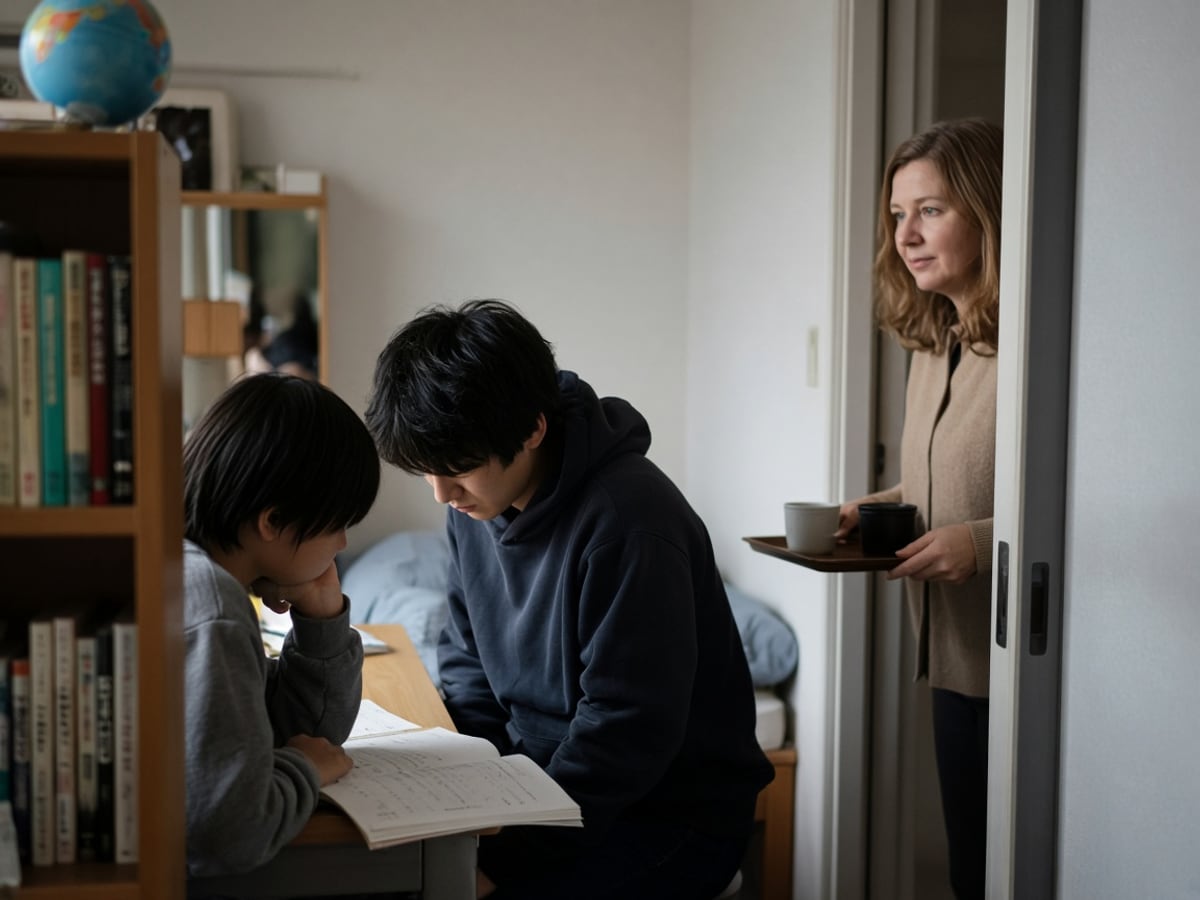
Children sit the junior-high exam (中学受験, chūgaku juken) at about twelve. Waseda Academy's grade-4 course page, opened on 9 October 2026, tells parents the work is heavier than at the high-school or university exam because the child is between nine and twelve. Choosing schools, keeping a weekly plan, and deciding what to study first are hard at that age. The page asks adults to do that work with the child, and then to hand pieces back as the child can carry them.
通塾し始めたばかりであれば、家庭学習のスケジュール管理や、丸付けなどは、保護者様に関わっていただく必要があります
At the start, Waseda asks you to manage the home-study timetable and to mark work. Later it asks you to step back from the parts the child can do, and to keep watching. It also asks you to take the child to school information sessions. A list chosen from a deviation score, a university-results table, or a visit the child did not attend is the pattern the page tells you to avoid.
What SAPIX asks the household to do
SAPIX's FAQ, opened the same day, describes the home half of its week. SAPIX says it teaches by review (復習主義, fukushū shugi):
サピックスはあくまでも「復習主義」ですので、予習の必要はありません。
You do not preview the next class. You repeat what was taught, using the notebook and the sheets the child was given that day. The teacher says, after each lesson, what that child should do at home. In grades 4 to 6 the child can ask the teacher in a question room after class. Younger children are told to phone the building. SAPIX will arrange a one-to-one meeting when you ask. For grade-6 parents it already schedules two of them: early June and late November. Those late-November meetings sit in the same weeks Waseda says families usually fix the school list.
SAPIX also says materials are handed out in the lesson, so the child encounters them there, and that classes are discussion around the board. A quiet child is still expected to listen. The household job on this page is the review the teacher names, plus getting the child to the building on foot or by train. SAPIX asks families not to drive up to the door or send the child by bicycle.
A published private-tutor price
A private tutor who comes to the home (家庭教師, katei kyōshi) is a different contract from a juku class. 家庭教師のノーバス publishes a price list. The figures below are for one lesson a week, four lessons a month. The tax-included amount is in parentheses where the page prints both.
The joining fee is ¥20,000 (¥22,000 including tax), once per household. A second child joining, or a family rejoining, does not pay it again. For a child preparing for the junior-high exam, any elementary grade, the teaching fee is ¥26,800 (¥29,480 including tax) for 90 minutes, or ¥29,600 (¥32,560 including tax) for 120 minutes. A learning-support fee of ¥3,300 a month, tax included, covers the company's side: a named staff member, messages, a notebook between visits, and similar running costs. The teacher's travel, outside a commuter-pass section, is the actual fare, paid to the teacher, and quoted when a teacher is introduced. The page says those lines are the whole bill, that you choose the materials, and that it does not sell an expensive textbook package. Lessons are paid monthly by bank debit or transfer. The page says it does not use a loan or a credit contract.
Two children taught at the same time: one joining fee, and the teaching fee is 1.2 times the elder child's rate for both children together. The support fee is half price from the second child. Two friends taught together: each teaching fee at 0.6 times. You can change teacher at no charge. You can put more than one subject in one visit, and you can add visits before a test or in a holiday.
The cooling-off window is eight days from the application date, with no conditions. After that, the leaving date is the end of a month, and you tell them by the end of the previous month. Leaving at the end of November means telling them by the end of October. There is no cancellation fee if you do that. If you miss that notice, the page says you can still leave by paying one month's fees or ¥50,000, whichever is lower. If you cancel before lessons start, outside the cooling-off window, the fee on the page is ¥20,000.
The ministry's learning-cost survey bundles correspondence courses and private tutors in one line, so it cannot tell you what a tutor costs. The Nobvas list is one company's published price for a weekly visit. Ask any other company for its own sheet. A tutor fee does not decide a school's decision.
What to do now
- For the first term at a juku, put the week's review on a written plan and mark the work the teacher named. Waseda asks you to let go of the parts the child can do alone.
- Book the grade-6 conversations you already know about: SAPIX says early June and late November.
- If you hire a tutor, keep the eight-day cooling-off date, and put the "tell them by the end of the previous month" rule on the same calendar as the juku bill.
- Take your child to a school session before you and the child have to live with a list fixed in December of grade 6.
Your child's dates, not the general ones
Add your child and ward. The timeline does the rest.