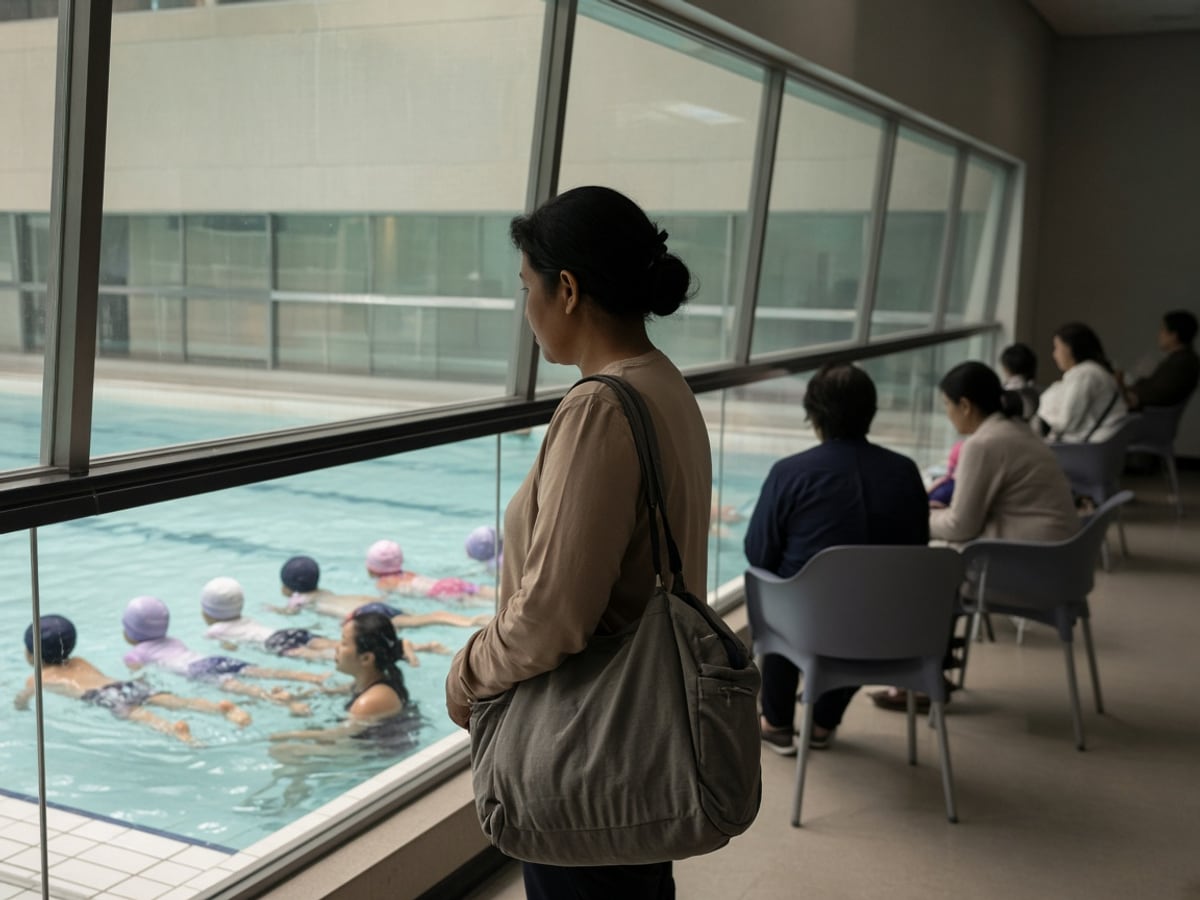
Lessons (習い事) at kindergarten age: what families actually spent
幼稚園児の学校外活動費(令和5年度子供の学習費調査)
- Applies to
- All of Japan
- Source last checked
- , Open the Japanese source
- Official source
- 令和5年度子供の学習費調査 調査結果の概要(令和8年1月16日差替、文部科学省)
習い事 (naraigoto) is the everyday word for a lesson outside school: swimming, piano, calligraphy, abacus, a language class. The Ministry of Education's survey does not use that word as a column. It asks parents what they spent in a year on their child's life outside school, then splits the money into two piles. The lesson pile is defined as:
けいこごとや学習活動、スポーツ、文化活動などに要した経費
Supplementary learning (補助学習費, hojo gakushui) is home study, correspondence courses, tutors, and juku (学習塾), including the juku's materials, tests, and the train to get there. The other pile (その他の学校外活動費) is everything aimed at skill, feeling, and health: outdoor and local activities, arts, sports, a trip or event abroad, and a last group the survey calls 教養・その他 — calligraphy, abacus, conversation classes, books, museums, and exam fees the family chose. Shared equipment is counted per child.
The figures below are annual averages for one child, from 1 April 2023 through 31 March 2024, in the overview MEXT reissued on 16 January 2026. They are national. They include families who spent nothing, so they sit below the price of a single swimming school. They are kindergarten pupils (幼稚園), not children in daycare. In the school statistics this survey cites, 88.3% of kindergarten pupils that year were in private kindergartens.
What a kindergarten year cost outside school
| Age | Public total | of which lessons and activities | Private total | of which lessons and activities |
|---|---|---|---|---|
| 3 | ¥55,629 | ¥36,708 | ¥97,158 | ¥62,367 |
| 4 | ¥97,842 | ¥65,956 | ¥167,000 | ¥120,917 |
| 5 | ¥123,700 | ¥81,423 | ¥199,352 | ¥134,166 |
| Kindergarten average | ¥100,049 | ¥66,405 | ¥157,535 | ¥107,943 |
Lessons and activities are the larger pile at every kindergarten age in the table: about two-thirds of outside-school spending at public kindergartens (66.4%) and 68.5% at private ones. The rest is supplementary learning.
Across a whole kindergarten, sports and recreation is the largest single kind of lesson. Arts come next at private kindergartens. The catch-all 教養・その他 group is close behind sports at public kindergartens, and at age 3 in a public kindergarten it is actually the larger line (¥17,804 against ¥11,960 for sports).
| Kindergarten average | Public | Private |
|---|---|---|
| Sports and recreation | ¥26,602 | ¥49,755 |
| Arts and culture | ¥12,858 | ¥24,618 |
| Calligraphy, abacus, conversation, books, museums, chosen exams | ¥22,092 | ¥26,214 |
| Outdoor and local activities | ¥3,837 | ¥5,283 |
| International exchange | ¥1,016 | ¥2,073 |
Sports rises with age. Public: ¥11,960 at 3, ¥25,161 at 4, ¥34,947 at 5. Private: ¥24,941 at 3, ¥57,762 at 4, ¥63,166 at 5.
Juku at this age is a minority
The survey's average juku bill at kindergarten is ¥14,167 a year in public kindergartens and ¥25,261 in private ones. That average is pulled down by the families who paid nothing. 83.1% of public-kindergarten households and 79.5% of private-kindergarten households spent ¥0 on juku that year. Among the households that did pay, the average was about ¥84,000 (public) and ¥123,000 (private).
By age, the all-household juku average was ¥6,109 / ¥16,859 at age 3 (public / private), ¥14,313 / ¥24,544 at age 4, and ¥18,034 / ¥32,945 at age 5. At public kindergartens, age 3 is the one place where correspondence and tutors outran juku inside the supplementary-learning pile. At every other kindergarten age in the table, juku is the largest piece of that pile.
Correspondence and tutors themselves were ¥0 for 72.3% of public-kindergarten households and 68.4% of private ones.
Girls' households spent a bit more than boys' on the lesson pile, at both public and private kindergartens. The survey also finds that outside-school spending tends to be higher in larger cities, and higher as household income rises. It does not publish a Tokyo-only kindergarten table.
How to use the numbers
These are descriptions of what parents paid, in a sample, two school years ago. They are not a fee a lesson school is allowed to charge, and they are not a mark you are supposed to hit. A studio that quotes a term fee, a costume, a recital, and a bus can land far from the average and still be an ordinary offer. The average also hides the many families at ¥0.
A private-kindergarten household's outside-school average (¥157,535) is one part of a larger kindergarten year. The same survey puts the whole learning-cost total, school plus meals plus outside activities, at about ¥185,000 for a public kindergarten and about ¥347,000 for a private one. School fees are the other articles. This one is only the life outside the gate.
The survey's "international exchange" line is small at kindergarten age. It is not a measure of English at home, and it is not a heritage-language class unless the family paid a teacher or a fee the survey would count.
What goes wrong
- Reading the average as "what a lesson costs." Most of the juku column is zeros. The sports column is a mean across every child, including children who do no sport.
- Comparing a monthly studio quote with a yearly average.
- Using a private-elementary figure. By grade 6 the same survey's outside-school spending is much higher, and that pattern is a different decision.
- Treating a daycare child as if this table covered them. The sample is kindergarten pupils.
What to do now
- Take the row for your child's age and for public or private kindergarten. That is the national mean for a year outside school, zeros included.
- If you are pricing one lesson, ask the studio for a year: monthly fee, kit, recital or match, and transport. Lay that next to the sports or arts line, and remember the line is an average.
- If someone describes juku as what kindergarten families do, the survey says otherwise: about four in five kindergarten households in the sample paid nothing to a juku that year.
- Check a newer release before you reuse the yen. This table is the 16 January 2026 correction of spending in the year to March 2024.
Your child's dates, not the general ones
Add your child and ward. The timeline does the rest.