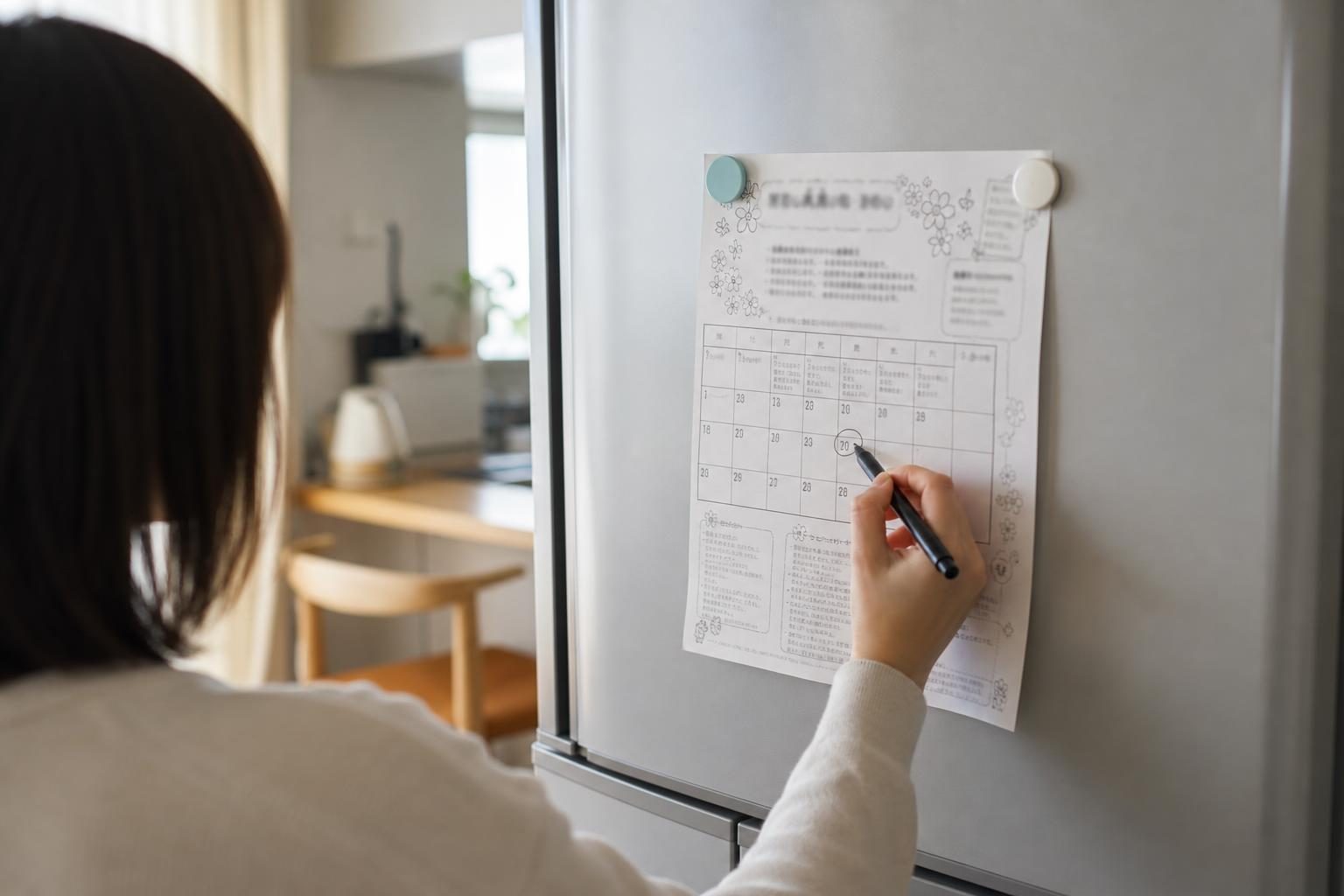
The class newsletter: where the dates, the things to bring and the money are hiding
学年だより・学級だよりの読み方
- Applies to
- All of Japan
- Source last checked
- , Open the Japanese source
- Official source
- 川崎市立南河原小学校 第1学年 学年だより 9月号(2026年8月31日)
A grade newsletter (学年だより, gakunen-dayori) or class newsletter (学級だより, gakkyū-dayori) arrives about once a month. It reads like a friendly letter, but it is also where the school puts dates, things your child must bring, and money that will leave your bank account. Nothing is in a box marked "action". You have to find it in the paragraphs.
This article walks through one real issue: the September 2026 grade-1 newsletter of Minamigawara Elementary in Kawasaki (川崎市立南河原小学校). Your school's version will look different. The habits carry over.
How that issue was laid out
Each topic started with a ◆ heading. The September issue had nine: water play, a summer-work exhibition, swimming lessons, morning glories, textbooks, a trip, a parent–teacher conference, a request for empty boxes, and the month's bank debit. A table of the month's lessons (【9月の学習予定】) took up part of the first page. Most headings asked parents to do something; none of them said so in a heading.
The actions that were inside the text
| What the paper said | What it asked you to do |
|---|---|
| Water play on 2–4 September; "please prepare the items listed in the summer issue" | Find the July newsletter for the list. Name every item. |
| Swimming at a sports club from 8 September, four sessions | Use the swimming notice handed out in April for the kit. |
| Morning-glory colour play on 10 September | Send flowers you froze over the summer on that day, not before. |
| Second-term textbooks handed out on 31 August | Check for misprints, write the name, send them back by 11 September. |
| Trip on 24 September | Packed lunch and water bottle. Details "in the guide handed out later". |
| Conferences from 28 September | Use the schedule handed out in July. |
| Collect boxes during September for maths | No cardboard boxes. Delivery day to come in the October issue. |
| Bank debit on 24 September: materials ¥258 + PTA fee for August–September ¥600 = ¥858 | Check the balance the day before. Families not in the PTA subtract ¥600. |
Three things stand out. The newsletter kept pointing back to older papers (April, July, the summer issue), so keep them until the term ends. The deadlines were inside sentences, not in a list. And the money line had a different total for families not in the PTA.
Phrases you will see, word for word
| On the paper | Meaning |
|---|---|
| 持ち物にはすべて記名をお願いします。 | Please write your child's name on every item. |
| 持ち物のご用意をお願いいたします。 | Please get the items ready. |
| 当日に持たせて下さい。 | Please send it with your child on the day. |
| 記名の上、9月11日(金)までに持たせてください。 | Write the name, then send it in by Friday 11 September. |
| 前日までに残高の確認をお願いします。 | Please check your account balance by the day before. |
| 詳しくは、配信メールおよび学校便りをご覧ください。 | For details, see the school's email and the school newsletter. |
The school newsletter it mentions (学校だより, gakkō-dayori) is a separate paper for the whole school. The grade newsletter tells you what your child's year is doing.
A simple routine
- Circle every date. Write each one in your own calendar the same day.
- Underline every verb that asks you to do something: 持たせて (send with the child), ご用意 (prepare), ご確認 (check), 記名 (write the name), 提出 (hand in).
- When the paper says "see the earlier notice", find that notice now.
- Find the money line. Note the debit date and the amount.
- If you cannot read part of it, ask the class teacher through the contact notebook (連絡帳).
Your child's dates, not the general ones
Add your child and ward. The timeline does the rest.