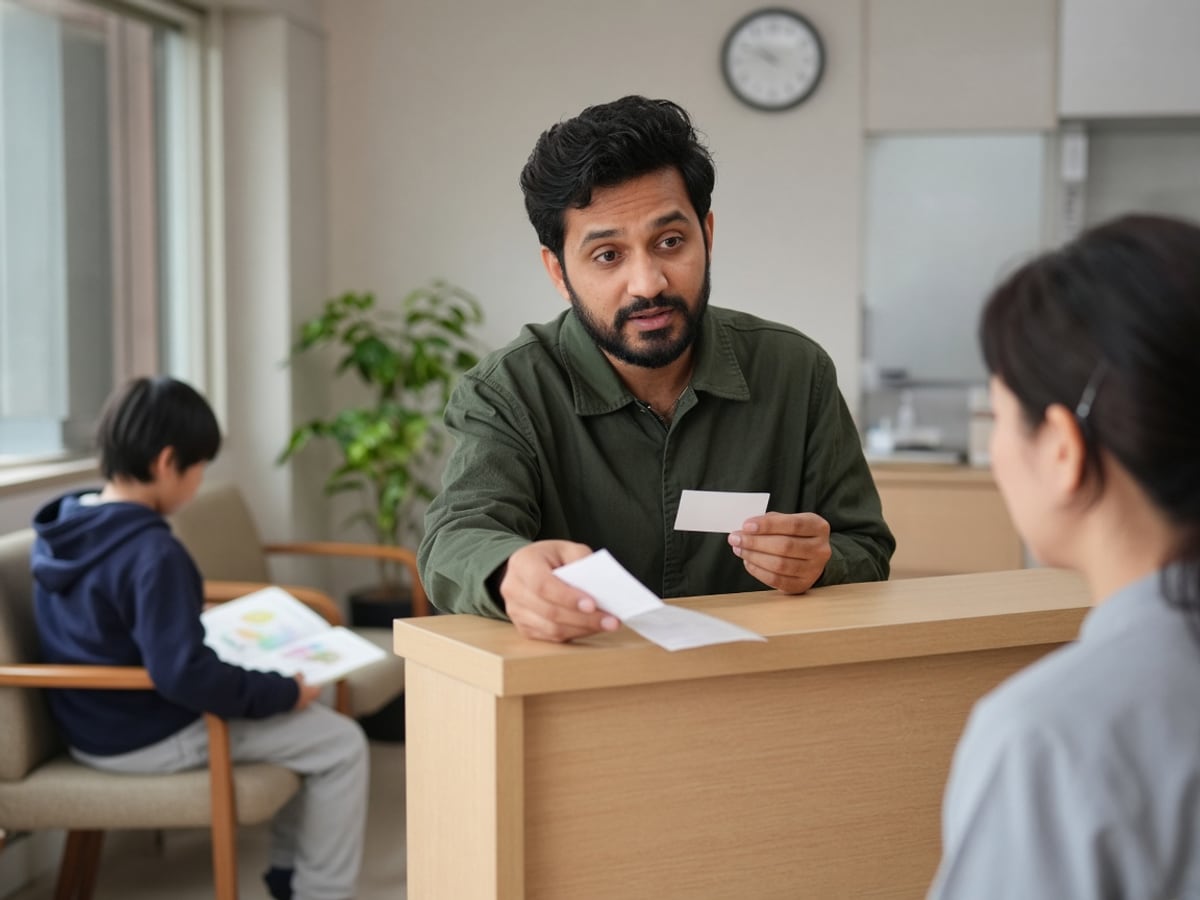
After the school health check: the result slip, the 21 days, and the doctor's note
健康診断の結果と受診報告書
- Applies to
- All of Japan
- Source last checked
- , Open the Japanese source
- Official source
- 学校保健安全法施行規則(昭和三十三年文部省令第十八号)
The school health check is a legal check, once each school year, finished by 30 June. The rule is in the enforcement regulations of the School Health and Safety Act (学校保健安全法施行規則, Gakkō hoken anzen hō shikō kisoku). If a child missed it because of illness or another unavoidable reason, the school does the check soon after that reason ends.
Within 21 days of the check the school notifies the child and the guardian of the result, and it must act on what it found. One of those actions is to direct the child to receive the medical care that is needed (必要な医療を受けるよう指示すること). Other actions on the same list include preventive treatment, a further test or vaccination, a period out of lessons in order to recover, lighter or changed study or exercise, sitting out a school trip or a sports contest, and moving a desk or a seat. The 21 days are the school's deadline to tell you, not your deadline to finish a clinic visit.
The items the regulations require include height and weight, nutrition, the spine, chest and limbs, eyesight and hearing, eyes, ear-nose-throat and skin, teeth and mouth, tuberculosis, heart, urine, and other illness. A school may add further measurements. The notice you get at home is the result of those items, often split across more than one slip.
The internal-medicine slip
The Ministry of Education publishes a sample notice for the internal-medicine check (内科健康診断結果のお知らせ). It is a reference form, one child to an A4 page. A school may design its own sheet. This sample has two results:
- No abnormality (異常なし, ijō nashi).
- Suspected abnormality (異常の疑い, ijō no utagai), with the finding written out. Several findings are separated with a comma.
If the second line is the one that applies, the sample says:
異常の疑いの場合は、できるだけ早めに医師の診察、指導を受けられることをお勧めします。
The visit report (受診報告書, jushin hōkokusho) on the same page becomes material for the school's health guidance, so it goes back to the class teacher. If the child is already being treated and you already know the result, write that on the report and hand it in. The sample's wording is
すでに通院され結果が分かっている場合は、受診報告書にその旨を記入し提出してください。
The doctor fills in the diagnosis and circles a plan:
| Plan on the sample | Meaning |
|---|---|
| 1 通院治療 | Outpatient treatment |
| 2 経過観察 | Watch and wait, with the date of the next check |
| 3 その他 | Another plan, written in |
| 4 特記事項 | Something to note |
Then the date, the clinic's name and the doctor's name. You return that half to the class teacher. Eyes, teeth and hearing can come on their own slips; this sample does not cover them. Read each slip for its own mark.
At Ota ward, what the follow-up looked like
Ota's FY2026 education overview gives the scale of two follow-ups in FY2025, so a family can see that a second test is a normal next step.
Urine, for ward elementary and junior-high pupils: 39,598 children on the first test, 1,033 on the second, 92 on the third, and follow-up guidance at 49 schools. A large first number and a small third number is what that year looked like.
Spine and limbs, checked at the regular examination: 39,199 children, of whom 285 were advised to attend a specialist hospital. Where scoliosis (側わん症) is suspected, the ward gives guardians a leaflet and asks them to see an orthopaedic clinic early.
Those counts are Ota's. Another ward prints its own.
Cost
The regulations and the sample slip do not set a fee for the check at school. The clinic visit is a medical appointment you book. The sample does not name a hospital. If the school has directed treatment and the family is in the aid category the School Health and Safety Act covers, Ota runs a separate medical ticket for that treatment. In FY2025 that aid reached one child, ¥24,810. Ask the school if you think it applies. It is a different scheme from an ordinary clinic visit.
What to do now
- Read which of the two lines is marked. A cancelled line, or a circle, is how the sample says the school should show the result.
- For 異常の疑い, book a doctor promptly and take the report half with you.
- If you already have a doctor and a known result, write that and still return the paper to the class teacher.
- Return the finished report to the class teacher. The sample does not give a calendar date; it says the report is for the school's health guidance.
- If your child missed the check, tell the school. The rule is that the school carries it out once the reason for missing it has ended.
- Keep eye, tooth and urine slips separate from the internal-medicine page. Each one can ask for its own visit.
Your child's dates, not the general ones
Add your child and ward. The timeline does the rest.