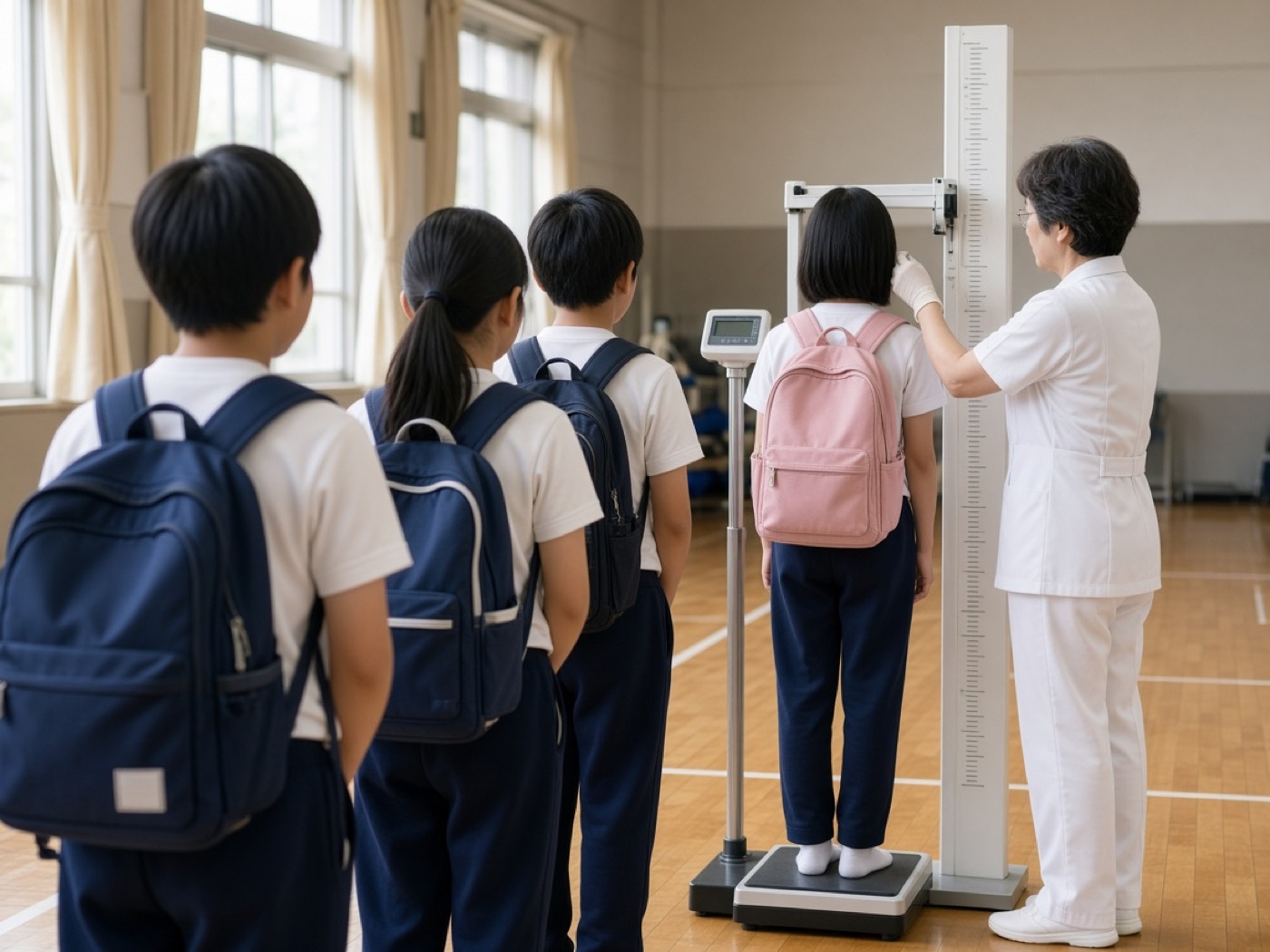
The yearly school health check is required, and the notice names the tests
定期健康診断
- Applies to
- All of Japan
- Source last checked
- , Open the Japanese source
- Official source
- 外国人児童生徒のための就学ガイドブック(文部科学省)
A health-check notice (健康診断, kenkō shindan) is the check the Ministry of Education's school guidebook says schools must give regularly, because the law requires it, so the school knows how the children are. From the result, the school may recommend treatment or give health guidance.
The guidebook's list of school tests includes height, weight, eyesight, hearing, tuberculosis screening, an electrocardiogram and a urine test. It says not every item is done in every grade. Doctors then examine internal medicine, eyes, ear-nose-throat and teeth.
The notice from your school names the date and what to bring, often a urine sample or a form. A separate health questionnaire (保健調査票) is how the school asks about history and emergency contacts. Fill in what the paper asks and return it by its date.
If a child is ill or hurt during the day, the guidebook says the school clinic (保健室, hokenshitsu) gives first aid and contacts a hospital or the family if needed. There is also a casualty mutual-aid scheme (災害共済給付) for injury at school. Parents pay part of the premium. The school's paper says how.
Verify the day's tests on the notice, not from this list.
Your child's dates, not the general ones
Add your child and ward. The timeline does the rest.