Japanese-language lessons at a public school: the special curriculum and how to ask for it
日本語指導が必要な児童生徒の「特別の教育課程」
- Applies to
- All of Japan
- Source last checked
- , Open the Japanese source
- Official source
- 学校教育法施行規則の一部を改正する省令等の施行について(通知)(文部科学省)
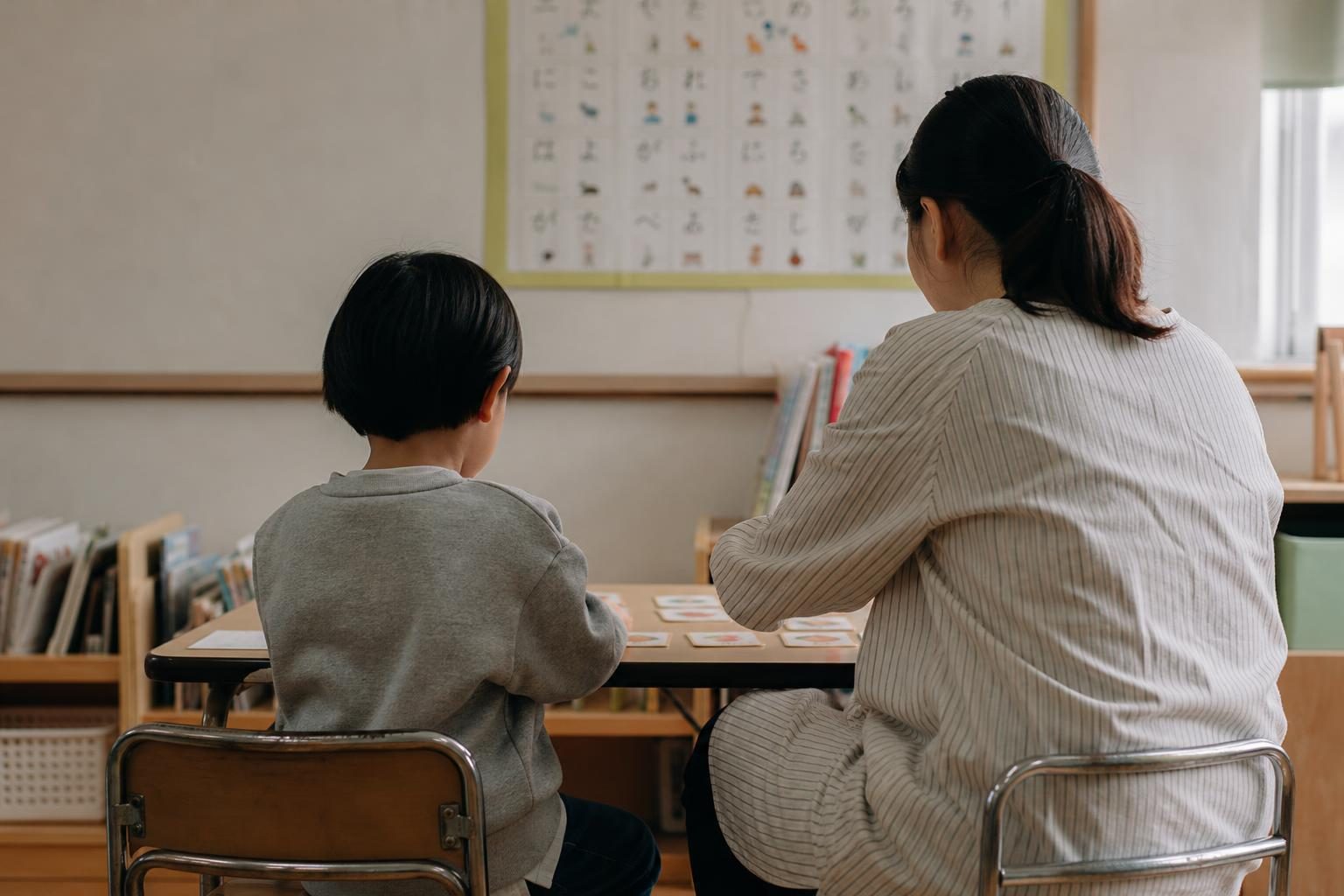
A public elementary or junior high school in Japan can teach Japanese to a child who is not yet at home in the language as part of the child's timetable. Since April 2014 the Ministry of Education has allowed this as a special curriculum (特別の教育課程, tokubetsu no kyōiku katei). It is taught in a room other than the child's own class. Schools often call these pull-out lessons 取り出し (toridashi).
The ministry's notice also covers the junior division of a combined secondary school and the elementary and junior divisions of a special-needs school.
Which children
The notice means children who came back from abroad, foreign children, and other children whose main home language is not Japanese, when their Japanese is not yet enough for school life and class work.
The principal decides which children receive it. The notice says the decision should draw on several staff, led by the teacher in charge of Japanese, looking at the child from more than one angle.
What it covers
- Japanese itself, and also subject lessons pitched at the child's level of Japanese. The content does not have to follow the child's grade.
- The notice says a child may be placed in a lower grade when first admitted, if needed.
- The standard is 10 to 280 lesson hours a year (単位時間). More than 280 is allowed when there is a special need. Lessons can be concentrated at the start, and the weekly hours can be set in stages.
- If the child also has special instruction for a disability (通級による 指導, tsūkyū), the two together are about 280 hours a year or less.
Who teaches, and where
- A licensed teacher, full-time or part-time, leads. The teacher assesses the child, writes the plan, teaches and evaluates.
- An assistant may help under that plan, including support in the child's mother tongue (母語による支援).
- In principle it happens at the child's own school, including by a teacher who visits several schools. If no teacher is available, it can happen at another school. The child's own school still writes the curriculum, and the other school sends its records back.
- The school writes an instruction plan with goals and content for each child, evaluates progress, and should review the plan regularly. The plan and the results go to the school's board.
How to ask
Ask the homeroom teacher or the principal:
- Does the school teach Japanese as a special curriculum, and who teaches it?
- How many hours a week, and for how long?
- Is there a written plan for my child, and when is it reviewed?
If the school has no teacher for this, ask the municipal board of education where the lessons would take place. The rules for your ward are local. This article does not assess a child's Japanese.
Your child's dates, not the general ones
Add your child and ward. The timeline does the rest.