Child medical subsidies in Tokyo, Kawasaki and Yokohama
子ども医療費助成(東京都・川崎市・横浜市)
- Applies to
- All of Japan
- Source last checked
- , Open the Japanese source
- Official source
- 義務教育就学児医療費の助成(マル子)(東京都福祉局)
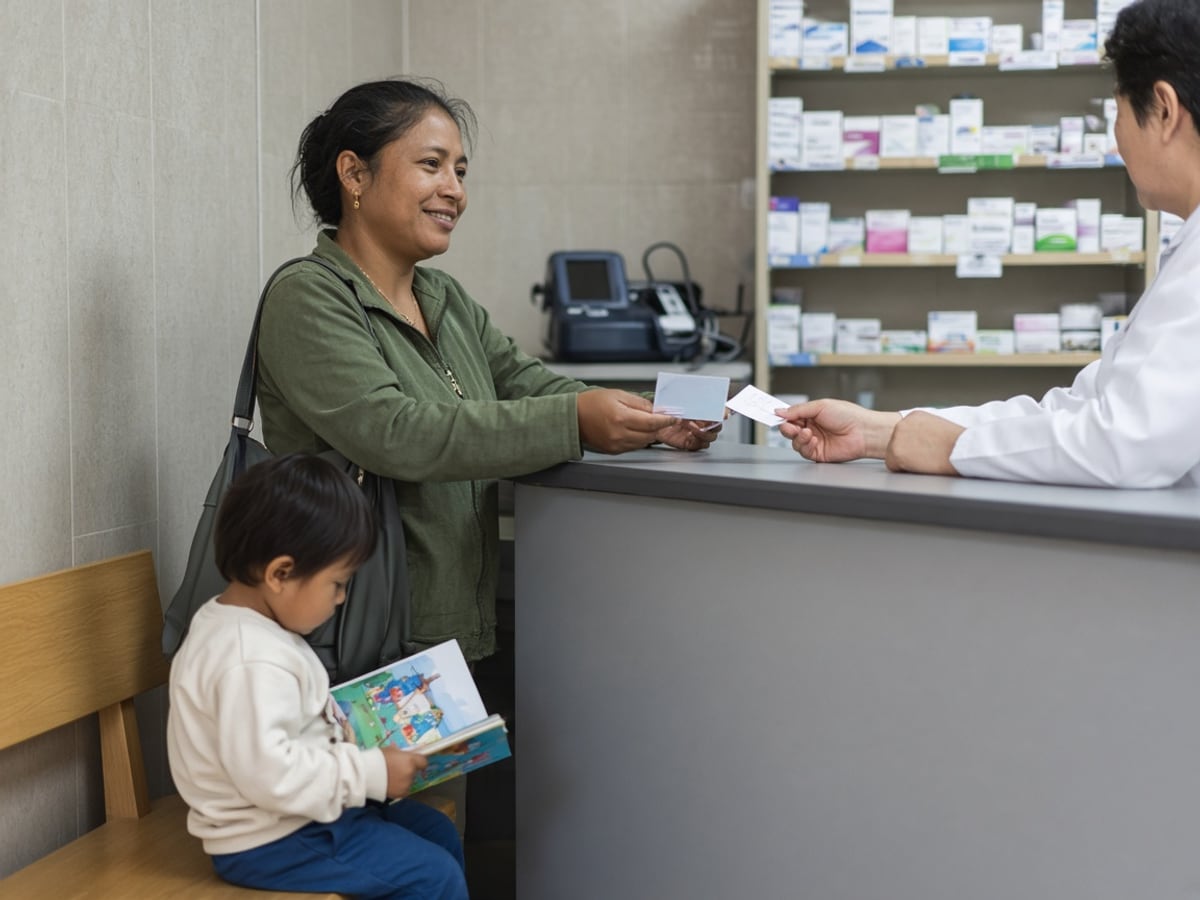
A child's insurance copay at a clinic can be reduced by a municipal medical card. Tokyo, Kawasaki and Yokohama do not issue the same card. You apply where the child has an address, after the child is on health insurance. Without the card you pay the insurance share yourself and, in some cases, claim it back later.
Tokyo: three cards, updated 1 April 2026
The Tokyo welfare bureau's pages, each updated 1 April 2026 (the first day of fiscal 2026, 令和8年度), split children into three grants. The child must live in a Tokyo municipality and be on health insurance. A child on public assistance (生活保護), or placed in a facility, is outside the grant. The bureau says address details differ by municipality.
| Card | Who | What you can still pay |
|---|---|---|
| マル乳 (maru-nyū, infants) | Until the 31 March after the 6th birthday (the page's phrase: the end of the pre-compulsory years) | The insurance copay is granted, except the standard inpatient meal charge. Some municipalities also grant that meal charge. This page does not print a per-visit yen cap. |
| マル子 (maru-ko, compulsory-school age) | From the 1 April after the day the child turns 6, until the 31 March after the 15th birthday | Outpatient: at most 200 yen a visit. Some municipalities charge nothing. Pharmacy and home-nursing visits: no charge on this line. Inpatient: you pay the standard meal charge. |
| マル青 (maru-ao, high-school age) | From the 1 April after the day the child turns 15, until the 31 March after the 18th birthday. Enrollment in a high school is irrelevant. | Same 200 yen ceiling and the same meal line as マル子. |
The 200 yen is the bureau's ceiling ("at most") on the マル子 and マル青 pages. The same sentences say some municipalities charge nothing at the window. Ask your ward which rule it uses.
Apply at the ward, city or town office. You receive a medical card (医療証, iryōshō). At the clinic, show the My Number insurance card, or another insurance proof, and the medical card. Some wards let the My Number insurance card stand in for the medical card at linked clinics. Outside Tokyo, at a clinic that does not take the card, or if your national health insurance is registered outside Tokyo, you pay the insurance share and claim it from your municipality with the receipts.
Not covered: a health check, a vaccination, a drug container, an extra bed, a document fee, or the premium for a long-listed brand drug when a generic exists. A school-management injury that the Japan Sport Council benefit covers is outside マル子 and マル青. One child gets only one card if they also qualify for a disability or single-parent grant.
Kawasaki, from 1 September 2026
Kawasaki's pediatric medical page, updated 1 September 2026, says the grant now covers a child living in Kawasaki, on health insurance, from age 0 through high-school age. High-school age on that page is the 31 March after the day the child turns 18. The grant pays the insurance copay (the 20% or 30% share) for outpatient care, pharmacy and inpatient care. The table prints no income limit (所得制限なし).
Until 31 August 2026, still inside fiscal 2026, children from grade 4 upward had a 500 yen payment per outpatient visit (households not taxed on income were already fully covered). From 1 September 2026 that 500 yen payment is abolished. A child of high-school age was outside the grant from 1 April through 31 August 2026. A bill from those months is not reversed by the new card.
The grant excludes the standard meal charge, an extra bed, a health check, a document fee, the selected-treatment fee for walking into a hospital of 200 beds or more without a referral, vaccinations, and the brand-name premium described above. If your insurer pays a high-cost refund, Kawasaki subtracts it; claim Kawasaki after that decision arrives.
At a Kawasaki municipal school, an injury under school management is handled through the Japan Sport Council benefit. The city says to pay the insurance share at the clinic (20% before elementary school, 30% from grade 1) and not to use the child card. If that benefit does not pay, you can claim the share back from the city.
For a new card, or a refund, call the pediatric medical-card center, 044-222-6211, weekdays 8:30–17:00. The September-expansion hotline 0120-905-011 runs until 30 October 2026. The one-time online form for the expansion mailing closed on 24 July 2026, so a family arriving now should use the center, not that form.
Yokohama, from 1 June 2026
Yokohama's page, updated 2 October 2026, says that from 1 June 2026 the grant covers a child with an address in Yokohama, on health insurance, from age 0 through the 31 March after the 18th birthday. The table says the grant is the full insurance copay for inpatient and outpatient care (全額助成). The table does not print an income cap. Excluded: a child already on another medical grant (including single-parent and severe-disability grants), a child on public assistance, and a child receiving measure medical care under the Child Welfare Act. An extra bed, a document fee, a health check and selected treatment stay outside the grant, including after June 2026.
Apply on the city's parenting site パマトコ (Pamatoko; an account is required), by mail, or at the ward insurance desk (保険年金課). Inside Kanagawa, show the child card and the insurance card. The card does not work at every clinic, and it does not work outside Kanagawa: pay, then claim. A claim dies five years from the 1st of the month after the visit. Group at least a month of receipts, and file within about a year if you can. The city says a refund takes about three months.
The card renews on its own. From age 1 that is 1 October in even years; the page names 1 October 2028 (令和10年) as the next one. An 18-year-old applies in their own name.
What goes wrong
- Using Tokyo's 200 yen sentence in Kawasaki or Yokohama, or the reverse.
- Going to a clinic before anyone has applied, then losing the receipts.
- Showing the child card for a school-ground injury in Kawasaki.
- Expecting the card to work on a trip outside the prefecture.
- Holding two grants and assuming both cards will be issued. Tokyo says one person, one card.
What to do now
This grant is one line on the money map. It is not the child allowance.
Your child's dates, not the general ones
Add your child and ward. The timeline does the rest.