Special-needs routes in Tokyo: the support room, the class, and who decides
東京都の特別支援教室と就学相談
- Applies to
- Tokyo
- Source last checked
- , Open the Japanese source
- Official source
- 東京都の発達障害教育(特別支援教室のご案内、東京都教育庁、令和6年度印刷物登録第35号)
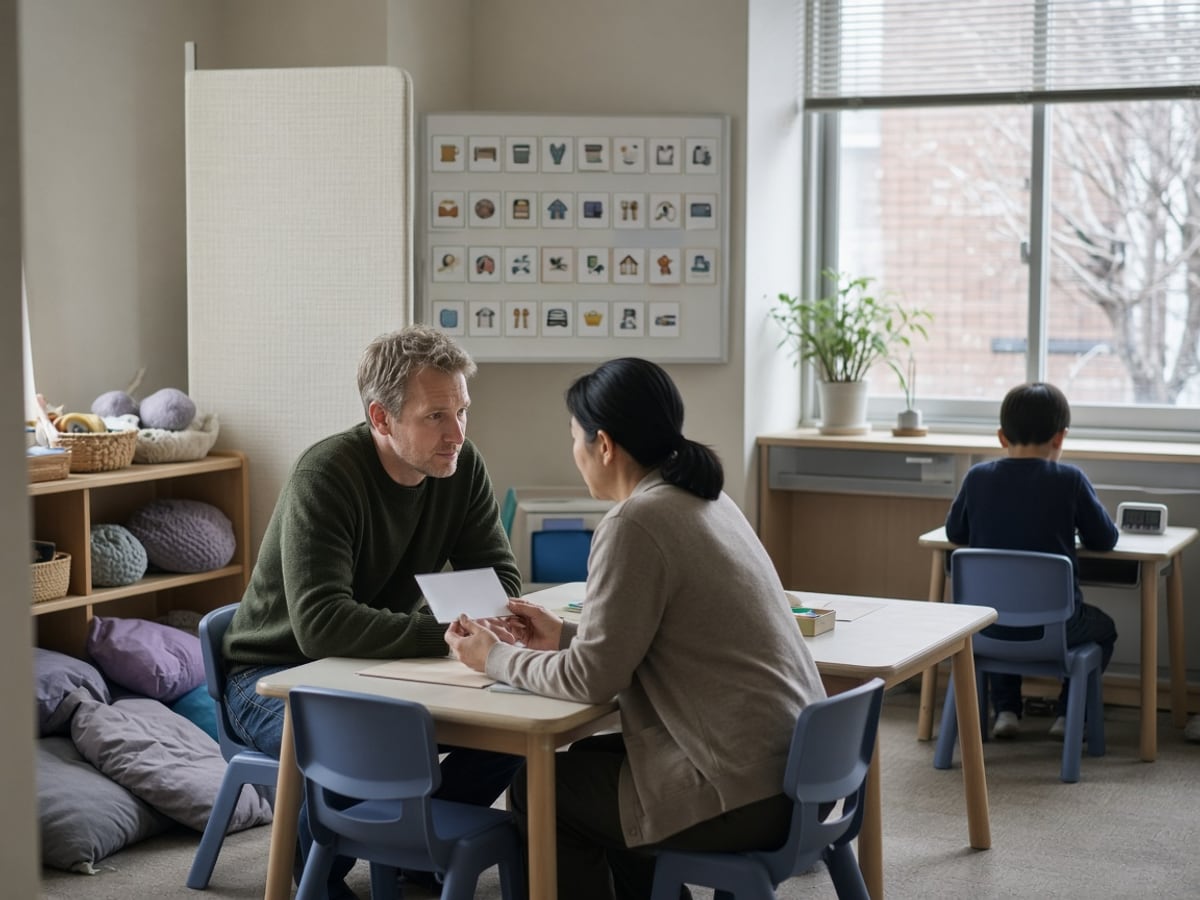
Tokyo's public elementary and junior high schools run a special-needs support room (特別支援教室, tokubetsu shien kyōshitsu) for children who stay on the roll of an ordinary class and need some teaching apart from it. The Tokyo Metropolitan Board's leaflet says the room is in every public elementary and junior high in Tokyo, and that the child, in principle, receives the teaching at their own school (特別支援教室は都内の全公立小・中学校に設置されており、原則自分の在籍する学校で指導を受けます).
The aim is narrow and practical. Teaching in the room is meant to reduce the difficulties the disability causes in learning or in daily life, so the child can spend as much time as possible in the ordinary class with the other children. It is instruction called 自立活動 (jiritsu katsudō, "independent activities"). The leaflet is explicit that the room does not preview or review school subjects, and does not exist to catch the child up on missed classwork.
Who the room is for
The leaflet's target is a child who:
- is on the roll of an ordinary class
- has no intellectual disability, and has autism, an emotional disability, a learning disability (学習障害, LD), or attention-deficit/hyperactivity (注意欠陥多動性障害, ADHD)
- can mostly take part in the ordinary class, and needs special teaching for part of the time
Emotional disability here includes selective mutism (選択性かん黙): a child who, for psychological reasons, cannot use their voice or words in a particular situation, such as with anyone except family or familiar people, or outside the home, when that gets in the way of school.
A diagnosis on its own does not put a child in the room. The leaflet says some children do well in the ordinary class once teaching and the room are adjusted, and that leaving the class for this teaching is a burden the school has to weigh. The decision includes agreement with the guardians.
Children with an intellectual disability are outside this room. The leaflet, quoting the ministry's handbook on pull-out teaching, says they need practical instruction that continues through the day, so a short pull-out does not fit. For a child whose needs are larger than an ordinary class can meet, Tokyo uses special classes for autism and emotional disability (自閉症・情緒障害特別支援学級). How many of those classes exist depends on the municipality. Ask that board.
In the ordinary class, the leaflet's examples of support are: fewer displays around the blackboard, so there is less to look at; ICT for a child who struggles to write; and care in how instructions and words are given.
Hours, teachers, and the year
The child leaves an ordinary lesson, such as Japanese, and goes to the support room for independent-activities lessons, from about one hour a month to about eight hours a week (月1時間~週8時間程度). Teachers who tour several schools (巡回指導教員) come on a set day and period. The child does not travel to another school for this. The teachers are based at a hub school (拠点校) so they can share methods and materials. A psychology specialist advises the teachers on the disability and on adjustments. A support-room specialist (特別支援教室専門員) observes and helps make materials.
The usual period of teaching is one year. The school writes an individual plan and goals, teaches, and looks again at how the child is doing, about once a term, with the guardians. If the goals are largely met, the child leaves the room and the ordinary class continues the support. If the committees later judge that the pull-out is needed again, the child can enter again. Leaving does not, on this leaflet, cut the support off.
Who you talk to, and in what order
Before the child starts school, the leaflet says to use the school-entry consultation window (就学相談, shūgaku sōdan) at the municipal board of education. After the child is enrolled, talk to the class teacher.
The flow the leaflet draws:
- The school, or the pre-school setting, looks at the child: interviews with the guardians, observation, and a doctor's examination where that is part of the local practice. The class teacher brings what they see, and what they have already tried, to a committee inside the school. That committee includes the principal and vice-principal, the nurse (養護教諭), the special-needs coordinator, and the school counsellor.
- If the school judges that some teaching in the support room is needed, it applies to the municipal board with the guardians' agreement.
- A judgment committee (判定委員会) at the board decides whether to start. It weighs the child's situation in the class, the disability, the support needed, and the burden of leaving the class.
The leaflet says this order can differ from one municipality to another.
Entry requires a developmental test (発達検査). The leaflet names the Kyoto Scale of Psychological Development (新版K式) and the WISC-IV as examples of standardised tests that show stronger and weaker areas and give the school clues for support in the ordinary class as well as for the room. The board tells you where the test is given.
At a Tokyo metropolitan high school, from FY2021 every school has a way to offer pull-out teaching (通級). The leaflet says to ask the high-school teachers after admission, and to read the board's pages for the detail. This elementary leaflet does not set the high-school application steps.
What to do now
- If the child is not yet enrolled, call the municipal board and ask for 就学相談. If the child is already in class, ask the class teacher for the in-school committee.
- Ask whether the next step is adjustment inside the ordinary class, the support room, or a special class. Those are three different placements on this leaflet.
- Ask where to book the developmental test, and take the appointment before you expect a decision. The leaflet makes the test part of entry.
- Ask how many hours a week the room would take, and which ordinary lessons the child would leave. The range on the leaflet is one hour a month to eight hours a week.
- The leaflet prints no fee for the room. Ask the board whether the test is charged, because that price is not on this paper.
- Keep the individual plan. The school is supposed to share the goals and the child's progress with you, and to review them about once a term.
Your child's dates, not the general ones
Add your child and ward. The timeline does the rest.