Temporary daycare, sick-child care, and Tokyo's babysitter grant
一時保育・病児保育とベビーシッター利用支援(事業者連携型)
- Applies to
- All of Japan
- Source last checked
- , Open the Japanese source
- Official source
- 令和9年度 保育所等・幼稚園・認定こども園 利用案内(川崎市)pp. 59–66
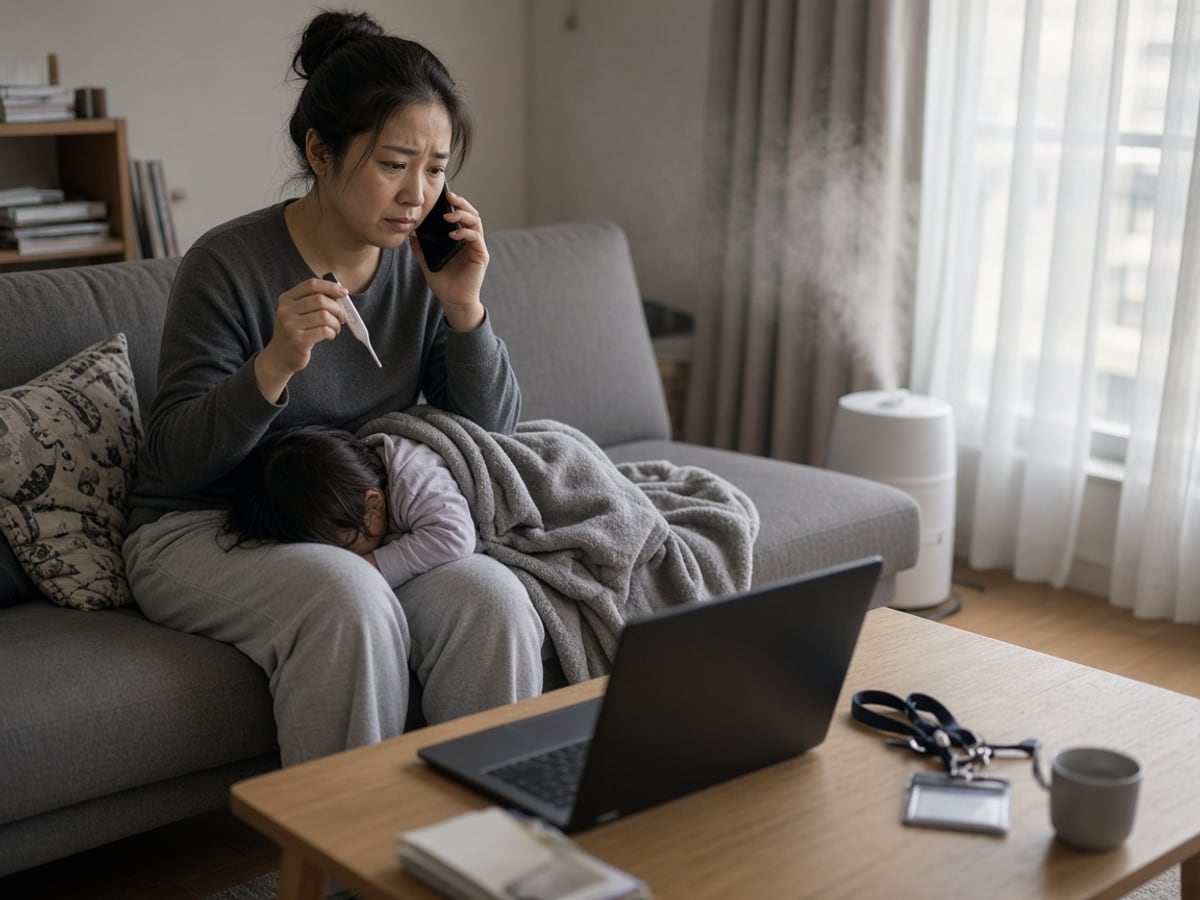
A full daycare place is one product. Three others sit beside it. 一時保育 (ichiji hoiku) is occasional care for a child who is not enrolled. 病児保育 (byōji hoiku) and 病後児保育 (byōgoji hoiku) are for a child who is enrolled, or in school, and is too ill for the group. Tokyo's babysitter grant (ベビーシッター利用支援事業, operator-linked) subsidises a private babysitter only in the municipalities that run it. Prices below are from Kawasaki's fiscal-2027 guide and from Koto's. The Tokyo page names who can apply. It does not print the yen.
Occasional care, if you do not have a place
Kawasaki's temporary care is for a child who is not in daycare, within three days a week or under 64 hours a month. Reasons include work or study, illness, a ceremony, or a short break. Non-regular care is about two or three days a week. Emergency care is about one day a week, or up to 14 days in a row for illness or a ceremony. A kindergarten child can sometimes use it in the summer. Each site takes on the order of 12 children for these services together. Register with the facility first. From January 2026 the city has online vacancy and booking. A full book means no place.
Kawasaki's ceiling, which a facility may set lower:
| Age on 1 April of that year | Daily fee, meals extra |
|---|---|
| Under 1 (until the day before the first birthday) | 2,900 yen |
| Under 3 | 2,500 yen |
| 3 and older | 1,500 yen |
City residents pay nothing, apart from real costs, if the household pays no resident tax, if income is under 3.6 million yen, if the household is on public assistance, if the child is with foster parents, or if a single parent receives the child-rearing allowance. Twins and triplets are free only for emergency care that is not for work. A second child pays half and a third pays nothing. Ages 3–5 who hold a facility-use certificate can count fees toward the free-fee cap, up to 40,300 yen a month (37,000 yen through September 2026). The cap is still three days a week or 64 hours a month.
Sick-child care, if you already have a place
Kawasaki takes children from five months old through the third year of elementary school who live in Kawasaki, or in Yokohama or Machida under the mutual-use agreement, and who are enrolled in daycare, kindergarten, a certified children's centre, or an unlicensed daycare, or who are in elementary school. Temporary-care users and kindergarten extended-day users are included. Hours are weekdays 8:00–18:00. Weekends, holidays, and the New Year are closed.
| Household | Kawasaki daily fee, lunch and snack included |
|---|---|
| Public assistance | 400 yen |
| No resident tax, or receiving the child-rearing allowance | 1,000 yen |
| Everyone else | 2,900 yen |
Register with a facility first. Same-day registration is allowed in an emergency. Book by phone and bring a doctor's instruction (主治医指示書). Some illnesses cannot be taken, or only in an isolation room. Say the symptoms when you book, and cancel as soon as the child recovers.
As of September 2026 Kawasaki lists seven Angel facilities: six for sick-child care with 12 places, and Angel Saiwai for recovery care with 8. The guide prints each address and phone number. Yokohama and Machida facilities are open to Kawasaki residents under the agreement.
Here is the trap if you already have a licensed place. Kawasaki states:
公立保育所、認可保育所、地域型保育事業、幼稚園、認定こども園、企業主導型保育事業(標準的な預かり)を利用されている場合は、病児・病後児保育は無償化の対象外です。
The free-fee cap does not swallow this bill when the child is already in ordinary licensed care, kindergarten, a certified children's centre, or standard company-led care. The 2,900 yen is a real daily cost.
Koto's version is for a Koto resident in daycare or some unlicensed care who cannot join the group. Register with the ward childcare desk at any time, then book the facility. The printed daily fee is 2,000 yen. You bring a doctor's contact form (医師連絡票). Weekday hours in the guide run from 8:00, 8:30, or 9:00 until 18:00, excluding holidays and, at hospital-linked rooms, days the clinic is closed. One room takes children from 7 months, others from age 1, all before elementary school. The five named rooms hold 4 to 10 children. What to bring is in the pack sent after registration, not in the guidebook.
Tokyo's babysitter grant
Since fiscal 2018, Tokyo has subsidised part of the fee at a babysitter business it has approved. You must live in a municipality that runs the programme, and you must already hold that municipality's notice that you are eligible. The three groups on the Tokyo page are:
- A parent of a waiting child in a 0- to 5-year-old daycare class.
- A parent who did not apply for a 0-year-old place, took a full year of childcare leave, and returns to work from the child's first birthday. Use starts on the return-to-work day.
- A parent who needs care at night.
The municipality can run only one of the three, and it can add an income limit.
The page lists Shinjuku, Taito, Shinagawa, Ota, Setagaya, Shibuya, Nakano, Suginami, Kita, Arakawa, Itabashi, Adachi, Katsushika, and Edogawa, plus ten cities from Hachioji to Musashimurayama. Minato, Chuo, Chiyoda, Bunkyo, Meguro, Toshima, Sumida, Koto, and Nerima are not on it. Kawasaki is not on it. A grant paid on or after 1 January 2021 is non-taxable, so it does not go on a tax return.
Kawasaki's family-support scheme (ふれあい子育てサポート) is neighbours, not this grant. Help runs from 4 months old through sixth grade. Weekdays 8:00–18:00 are 800 yen an hour and other weekday hours are 900 yen, paid to the helper. A sick child, medicine, and overnight care are refused. The weekend rate did not extract, so it is not quoted.
What goes wrong
- Using temporary care as a full place. Kawasaki's cap is three days or 64 hours.
- Assuming the free-fee rule pays Kawasaki sick-child care when you already have a licensed place.
- Applying for Tokyo's babysitter grant in a municipality that is not on the list, or before the eligibility notice.
None of these promises a slot on the morning you need it. Temporary care can be full. Sick-child rooms are small.
What to do now
- In Koto, sick-child registration is the ward desk on 03-3647-4934, then the facility.
Your child's dates, not the general ones
Add your child and ward. The timeline does the rest.
Get a written 保活 (hokatsu) review
A named advisor reads your family profile and writes back to you by email within 48 hours.
Didn't help you decide? Reply to the email within 7 days and we refund it in full.
Paid through Stripe. We never see your card.
Secure checkout by Stripe