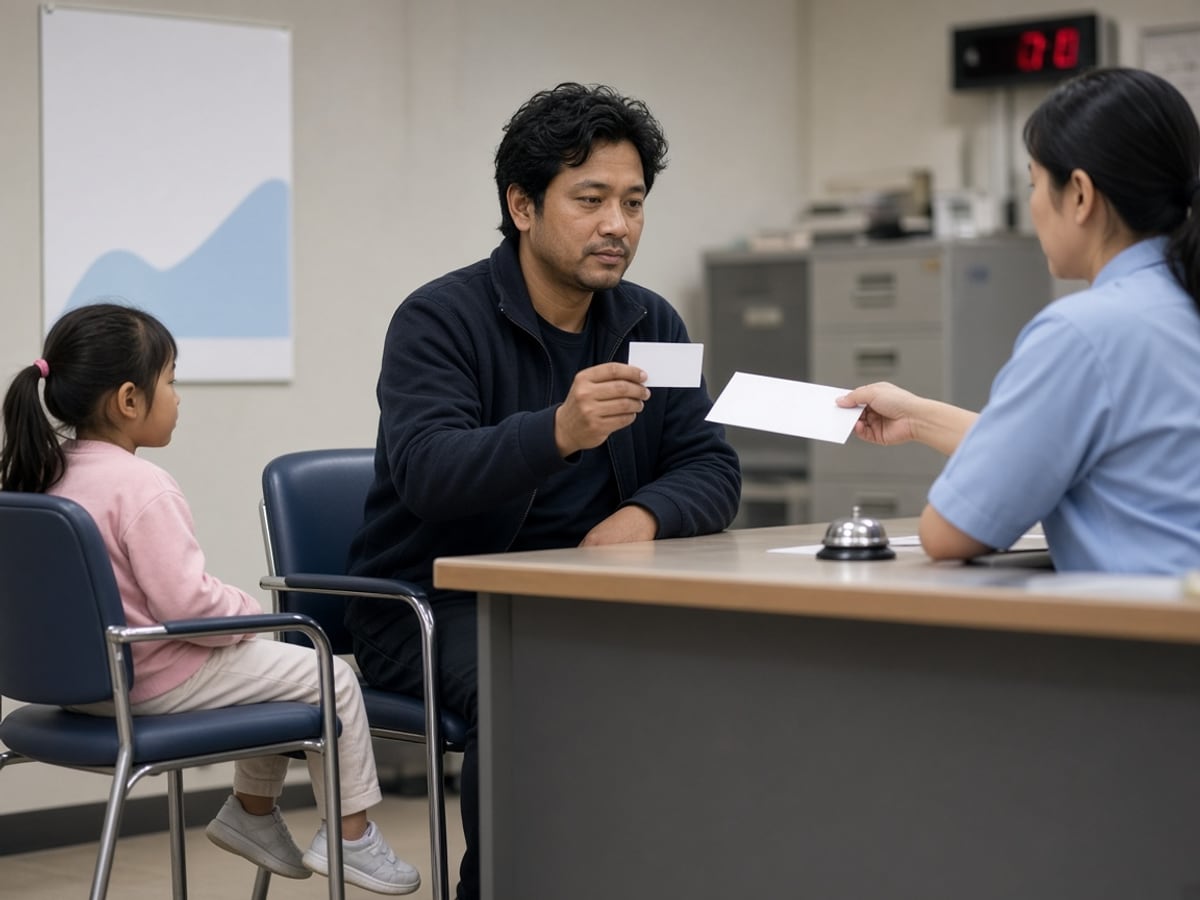
A foreign child starts at a public elementary school by applying to the municipal board
外国人の子供の公立小学校への就学手続き
- Applies to
- All of Japan
- Source last checked
- , Open the Japanese source
- Official source
- 外国人児童生徒のための就学ガイドブック(英語版、文部科学省、2015年4月)
Public elementary school in Japan is open to a child of foreign nationality who will live in the municipality. The shorter ministry leaflet says that if you want a public elementary or junior high place, the child is accepted free of charge on the same terms as a Japanese pupil:
外国人の子供も、公立の小学校・中学校への入学を希望する場合は、日本人児童生徒と同様に無償で受け入れており、日本人と同一の教育を受ける機会を保障しています。
The longer guidebook, Guidebook for Starting School (就学ガイドブック, shūgaku gaidobukku, April 2015), says that when a foreign child receives Japanese schooling, the child basically receives the same education as a Japanese child. Lessons are normally in Japanese: 授業は通常日本語で行われます。 The school for your address is chosen for you. It is the designated school (指定校, shiteikō).
What you file, and in what order
The guidebook's flow for a new start or a transfer into elementary or junior high is:
- File a moving-in notice (転入届, tennyū todoke) at the resident-registration counter of the city, ward, town or village.
- Tell that office and the board of education (教育委員会, kyōiku iinkai) that you want the child in school. For a brand-new first grader they hand you a school-enrolment guide (就学案内, shūgaku annai). Otherwise they hand you an application for enrolment of a foreign child (外国人児童生徒入学申請書).
- Fill it in and hand it back. Check the name and address of the designated school on the spot.
- They give you an enrolment permit (外国人児童生徒入学許可書), the same day or by post.
- Go to that school with the child, the permit, and papers from the school in the home country, such as a certificate of enrolment and a transcript. Talk through the school life ahead.
At that meeting the guidebook lists what the school is likely to ask: the child's name and the name people call them, sex, date of birth, date of arrival, nationality, address, how long the stay is and how long you plan to stay, health and allergies, school history and grade abroad, Japanese study, family contacts, how the child will travel, and whether you need an interpreter.
Within Japan, a later move needs a moving-in notice within 14 days, plus a student-registration certificate and a textbook-provision certificate from the old school. Tell the current school or the board before you transfer, and again before you leave the country.
The grade follows age, not the grade the child had abroad. Children born from 2 April through 1 April of the next year share a grade. A temporary lower grade is possible when Japanese is not yet enough for the age-level curriculum. That rule, and the sentence that there is no skipping of grades, is written up in how age sets the grade. Some municipalities will move the designated school so the child can receive Japanese-language teaching. Ask the board. The guidebook does not set a language test.
What one ward adds
Wards publish their own calendar on top of that flow. Nerima's page for a child of foreign nationality, updated 9 October 2025, says the school is fixed by the address and that you cannot freely choose it. Residence status is not a condition. A very short intended stay can mean the ward will not enrol the child.
For an April start, Nerima's page describes this order: in August an application (入学願) is sent to the home, and you file it if the child will attend a ward school, or a reply slip if not; in October a school entry notice (就学通知書, shūgaku tsūchisho) names the elementary school and the pre-entry health check; in January or February the school holds a parents' briefing; in April you hand the notice in at the entrance ceremony. If you filed and then decide against the ward school, tell the School Affairs desk. The electronic form linked from that page is titled for Reiwa 8 new entry. Treat it as last year's form until the desk confirms the current one.
Setagaya's dates and counter are a separate article: Setagaya foreign-child entry. A child moving in during the year should call the board one to two months before the move, then the vice-principal about two weeks before the first day. In Nerima you take the child's passport to School Affairs on the 12th floor after the moving-in registration, fill in an acceptance card, and take the admission notice and the card to the school.
What it costs
Public elementary and junior high tuition is free, and textbooks for those years are given to each child. The guidebook says parents pay for school lunch and for extra materials, and that supply and lunch help (就学援助, shūgaku enjo) exists if the municipal board agrees that money makes attendance difficult. Amounts and the income line are not in the guidebook. Use school expense aid and the ward's own form.
What goes wrong
Families wait for an invitation. The guidebook's step is that you tell the board you want the place. A notice that never comes often means the application was never filed, or the address on the resident record is not the one you think the child lives at. Nerima will not treat a short visit as enrolment. Using a form headed for a previous April, or assuming you may pick the campus, sends the file back. If someone other than a parent must file, ask the board what authority they need. Setagaya asks for a letter of attorney. The guidebook does not.
What to do now
- Register the address, then tell the municipal board you want a public elementary place. Take passports and any school papers from abroad.
- Ask which year's form is current, and the month they mail the school entry notice for an April start.
- When the notice arrives, open it. It is the paper you hand in at the ceremony, and it names the school and, in wards such as Nerima, the health check.
- If the child will not take the ward place, tell the board before they hold a seat.
- Nerima School Affairs, school affairs desk: 03-5984-5659. Your own ward's number is the one to use if you do not live there.
Your child's dates, not the general ones
Add your child and ward. The timeline does the rest.