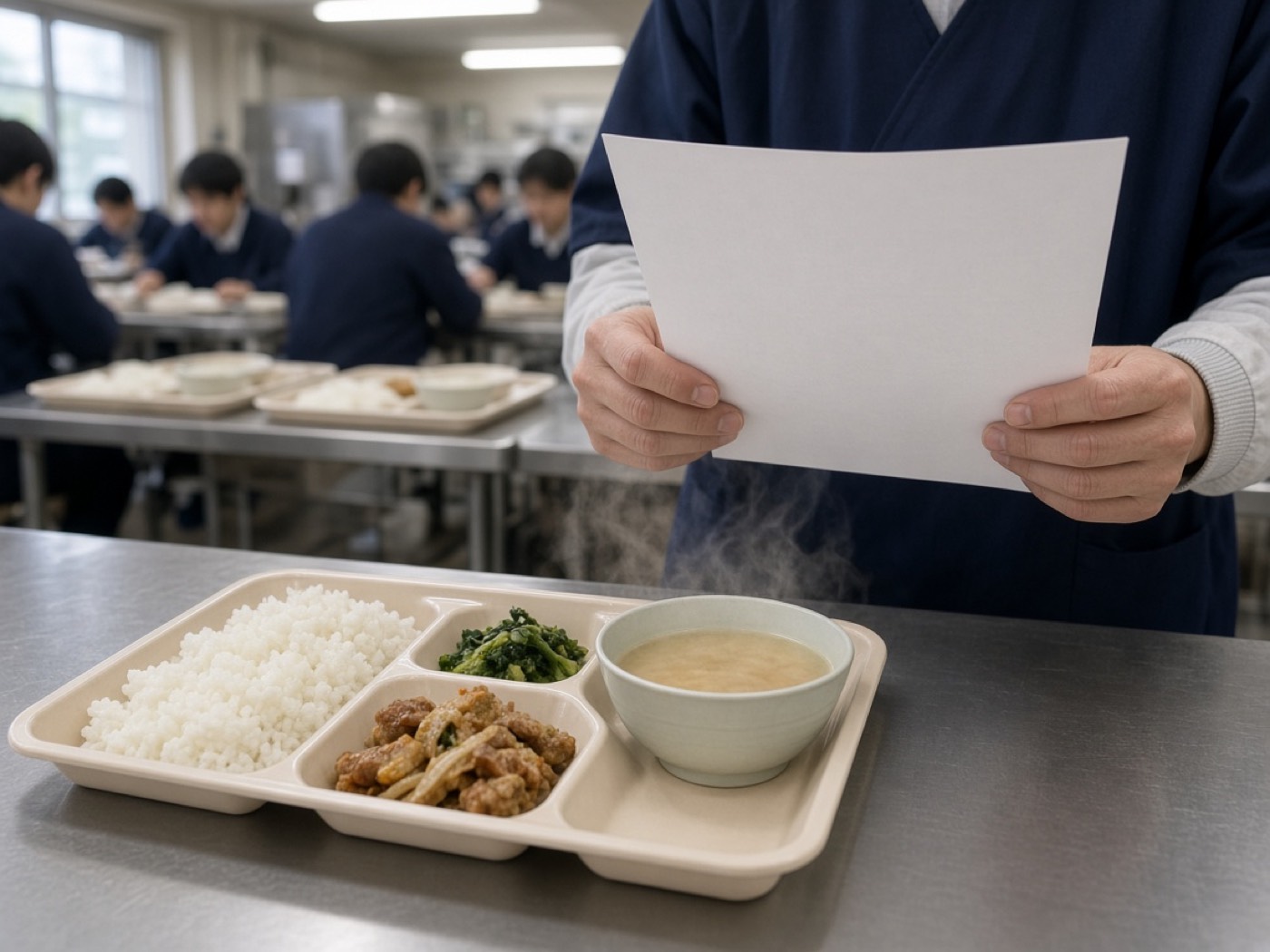
The school-lunch allergy form is a doctor's sheet, and each school writes its own rules
学校給食の食物アレルギー対応と学校生活管理指導表
- Applies to
- All of Japan
- Source last checked
- , Open the Japanese source
- Official source
- 学校給食における食物アレルギー対応について(文部科学省)
A food-allergy form from a Japanese school is not a menu and it is not a diagnosis. The Ministry of Education's page on school-lunch allergies points schools to a guideline (学校給食における食物アレルギー対応指針, published 2015) and asks each education board to write its own policy from that guideline.
What the guideline requires
The guideline says that if you want the school to manage an allergy, you submit a doctor's school-life management form (学校生活管理指導表, gakkō seikatsu kanri shidōhyō), allergy version. Making that form required is how the school limits the response to children who have a doctor's diagnosis.
The same guideline's basic rule for safety is complete removal of the food that causes the reaction: the kitchen either serves that food or it does not. It also says the school should explain its allergy arrangements at the preschool-entry health check and at parents' meetings, and should ask families who want a response to hand in the doctor's form.
The ministry page adds one note about seasonings, stock and additives, including spices, that are listed in a table on page 19 of the guideline: those generally do not have to be removed, and anything not in that table is treated as complete removal. The decision still has to be checked again with you and with the doctor. This article does not copy that table. Open the guideline before you assume an ingredient is safe.
What to do with the paper
Fill in what the school asks, by the date on the paper, and return the doctor's form if the school says it needs one. The school and the kitchen then follow the board's own manual, which can be stricter or simpler than a neighbouring ward. The guideline tells schools not to build a plan so complicated that the kitchen cannot do it safely.
This page does not say what your child can eat. That is the doctor's form and a conversation with the school. Verify the year's procedure with the school office.
Your child's dates, not the general ones
Add your child and ward. The timeline does the rest.