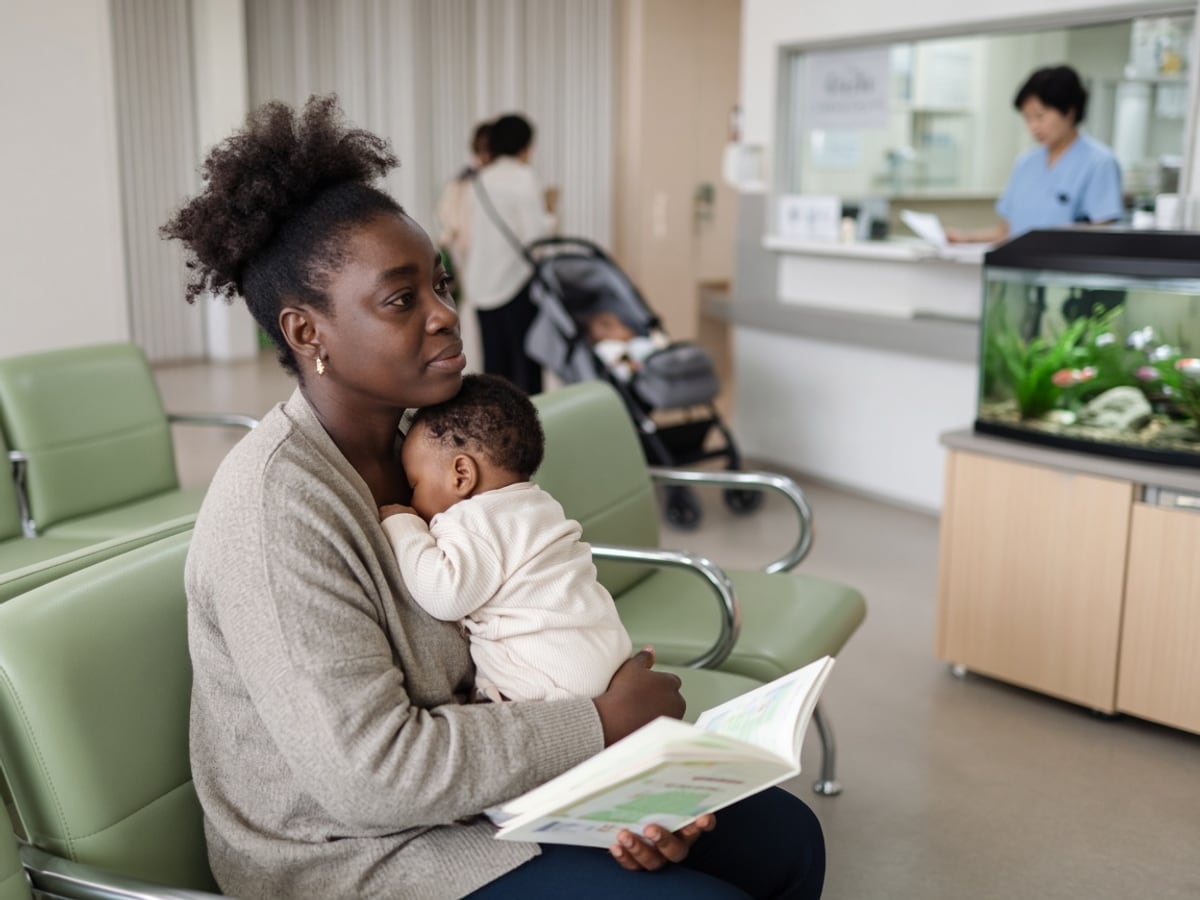
Infant health checks and the vaccines a daycare asks to see
乳幼児健診と保育所が確認する予防接種
- Applies to
- All of Japan
- Source last checked
- , Open the Japanese source
- Official source
- 保育所における感染症対策ガイドライン(2018年改訂版、2023年7月一部修正)こども家庭庁
Daycare will ask what your child has already been vaccinated against, and it will not take your memory as the record. The national daycare infection guideline tells staff to read the maternal and child health handbook (母子健康手帳, boshi kenkō techō). The Children and Families Agency's page for foreign residents tells you to get that handbook from the municipality where you live, and to take it to infant health checks (乳幼児健診, nyūyōji kenshin) and to vaccinations. Those pages do not print the age-by-age check calendar. The municipality gives you that calendar with the handbook. What follows is the handbook, and the vaccines the guideline tells daycares to discuss.
The handbook, and the checks it is carried to
The Agency's page says Japan's pregnancy and childcare procedures can differ from your home country. When you know you are pregnant, or think you might be, see an obstetric clinic. Then file the pregnancy notification (妊娠の届出) at the municipal counter where you live and collect the handbook. You also receive vouchers that reduce the cost of prenatal checks (妊婦健診の補助券). A public-health nurse interviews you. That is where classes are explained and where you can raise worries. Ask whether a handbook in your language is available. The page tells you to ask. It does not list the languages.
Take the handbook to prenatal checks, to infant health checks, and to vaccinations. After you have it, you can still go back to the municipal nurses with a problem in pregnancy.
A health-ministry notice of 31 October 1991, still the published handling note, says the municipality of residence issues the handbook when the pregnancy is notified, and that it can still be issued after the birth if it was not issued during pregnancy. A household that arrives with a baby and no handbook should ask the counter where they now live, and should not assume the 1991 paperwork is unchanged. When you move, the same notice says to tell the new municipality so the address in the handbook is corrected.
The pages that were read do not list a fee for the handbook, and they do not list the months of the infant checks. Those dates are on the local insert. Some checks are by appointment.
What the daycare is told to ask about
The guideline, corrected in July 2023, says shots which can be given before enrolment should be given in the standard window before the child starts. Staff should keep a checklist of vaccines and of illnesses already had, review it at health checks, and tell parents if something is still open. Memory is a poor record. The handbook is the record. For measles, rubella, chickenpox, mumps, and hepatitis B, a blood test can also show antibodies.
The guideline separates routine vaccines (定期接種, teiki sesshu), which municipalities run under the immunisation law, from voluntary ones (任意接種), which a parent requests. For the routine list it describes as applying to children, municipalities actively recommend the shots, and parents are expected to try to have them given. Voluntary vaccines are in principle paid by the parent, though some municipalities subsidise part or all of the cost. Speaking as of May 2023, the guideline names mumps and influenza as voluntary examples. A 2026 clinic bill can differ. Ask the municipality before you pay.
The schedule for the first year is crowded. The vaccines the text says matter for daycare children are rotavirus, Hib, pneumococcal, hepatitis B, DPT-IPV (diphtheria, whooping cough, tetanus, polio), BCG, measles-rubella (MR), chickenpox, and Japanese encephalitis. It also asks daycares to say that mumps vaccine matters because the virus keeps circulating in daycares, and that influenza vaccine reduces severe illness.
Timings the guideline tells daycares to pass on:
| When | What the guideline says to tell parents |
|---|---|
| From 2 months | Hib, pneumococcal, and hepatitis B. Rotavirus: the first dose from 2 months and by 14 weeks and 6 days is the preferred window. Later doses at least 27 days apart. The number of doses depends on the product. |
| From 3 months | DPT-IPV. Whooping cough in infants is described as severe and very infectious. |
| 5 to 8 months | BCG, as early as possible in that window. |
| From the first birthday | MR, promptly. Chickenpox: two doses, at least 3 months apart, usually 6–12 months apart. |
| The 5-year-old class | The second MR dose before the child leaves daycare. |
| Japanese encephalitis | The standard in the text is two doses at age 3 and one at age 4. Routine vaccination is possible from 6 months. |
Different injectable live vaccines are spaced at least 27 days apart, unless a doctor gives them together. A missed window should go to a paediatrician. The guideline points to the Japan Pediatric Society for catch-up schedules. It also says a shot that can be done before enrolment is worth doing then, because children get ill suddenly. One suggestion to staff is to mention, at a parents' meeting, getting the shot on a day you have already taken off work.
The guideline tells daycares to explain side effects as well as the illness. It does not make a complete vaccine record a condition of a place. It tells the daycare to record the handbook and to encourage the missing shots. The practical problem is an outbreak later, and a form you cannot fill from memory.
What it costs
The handbook page does not print a price. Routine vaccines are the municipality's programme. Voluntary vaccines are in principle your cost, with local subsidies in some cities. The guideline does not print those subsidies. No infant-check fee is stated in the pages that were read.
What goes wrong
- Arriving with no handbook and reconstructing vaccines from memory. The guideline tells staff not to trust memory.
- Missing the rotavirus window. The first dose has an early cut-off: 14 weeks and 6 days.
- Treating the May 2023 list as if a combination product could not have been added since. Confirm the current routine list with the municipality.
What to do now
- If you are pregnant, file the notification and collect the handbook. Ask about a copy in your language.
- If the child is already here and there is no handbook, ask the municipality where you live. The 1991 notice says issuance after birth is possible. Confirm the current counter.
- Take the handbook to every check, every vaccination, and the daycare meeting.
- Compare it with the table above. Ask a paediatrician about anything still open, especially rotavirus after 14 weeks and 6 days.
- Ask which shots are routine, which are voluntary, and which voluntary shots the municipality subsidises.
Your child's dates, not the general ones
Add your child and ward. The timeline does the rest.
Get a written 保活 (hokatsu) review
A named advisor reads your family profile and writes back to you by email within 48 hours.
Didn't help you decide? Reply to the email within 7 days and we refund it in full.
Paid through Stripe. We never see your card.
Secure checkout by Stripe