School help in your language: the Tokyo and Kanagawa lines
通訳つきの教育相談(東京都・神奈川県)
- Applies to
- All of Japan
- Source last checked
- , Open the Japanese source
- Official source
- 通訳を介した外国人児童・生徒の高校等進路・教育相談(東京都教育相談センター)
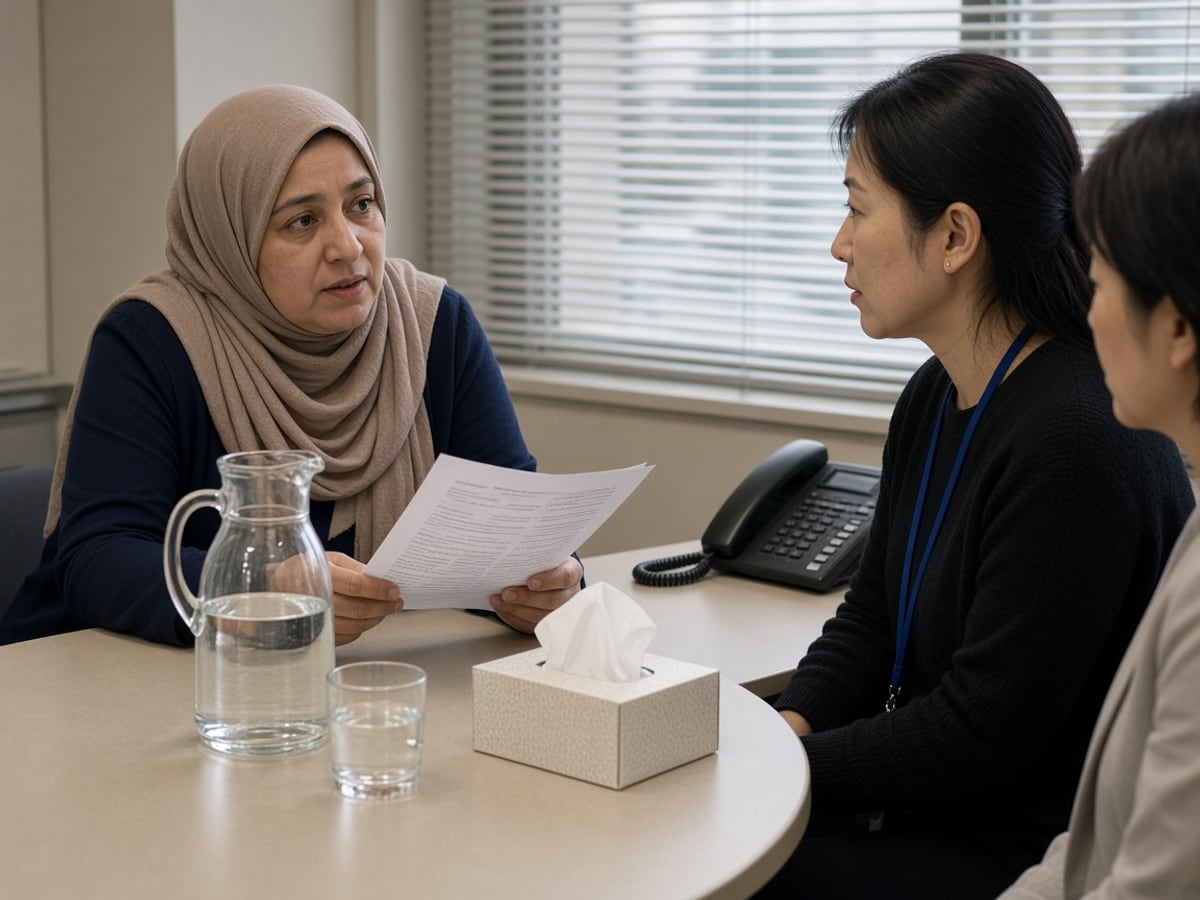
A school question you cannot ask in Japanese still has an official desk. Tokyo and Kanagawa publish different ones. Neither desk enrols the child. They explain the system, and they sit with you in another language for a fixed hour. For a printed notice, try the ministry's form search first: Kasutanetto. Call a person when a date or a yes-or-no is still unclear.
Tokyo: Friday afternoon, three languages on the phone
The Tokyo Education Consultation Center (東京都教育相談センター) offers interpretation for foreign children and their parents. The page describes school life ("not used to a Japanese school") and high-school plans ("I want to go to a Japanese high school and I do not understand the system").
On the phone, interpreters in English, Chinese, and Korean are there every Friday, 13:00–17:00:
毎週金曜日午後1時から午後5時まで(祝日、年末年始を除く)
Holidays and the year-end break are excluded. Two numbers:
| Question | Number | Who it is for |
|---|---|---|
| School life in general (教育相談一般) | 0120-53-8288 | From infant age through high-school age: bullying, friends, school life, not attending, parenting worries, family, development, and related harm |
| Tokyo metropolitan high schools (高校進級・進路・入学相談) | 03-3360-4175 | Entry, grade progression, transfer and mid-year admission at a metropolitan high school |
Those two lines answer in Japanese at other hours.
You can also go in person. Say 通訳希望 (tsūyaku kibō, "I would like an interpreter") on the phone or on the form, and book. An interpreter in the room is English, Chinese or Korean. An online interpreter, which the page says is a trial, adds Nepali, Filipino (Tagalog), Vietnamese, Thai, Portuguese, Spanish, Indonesian, French, Hindi and Russian. To book that online interpreter, the page says to reserve by phone in Japanese, or to call during Friday afternoon, when the Chinese, English and Korean interpreters are on duty, and ask then. The high-school booking form is in Japanese. If that form is too hard, use the Friday phone hour instead of leaving it blank.
The center gives information and advice. It does not assign a school. Your ward or city's board still makes the place. The order of calls when something is already going wrong inside a school is in who to call when something goes wrong.
Kanagawa: match the day to the language
Kanagawa Prefecture's education page, updated 23 July 2026, runs foreign-resident education consultation (外国人教育相談) at the Earth Plaza (地球市民かながわプラザ, Āsu Puraza), 2nd floor, Information Forum, 1-2-1 Kosugaya, Sakae-ku, Yokohama. The nearest station named on the page is Hongōdai, about five minutes. It is for foreign learners, parents, schools and supporters.
The page lists the languages in one sentence:
タガログ語、ポルトガル語、中国語、スペイン語、ベトナム語、やさしい日本語で相談することができます。 You can visit, or use phone, fax, email or Messenger. Hours are 10:00–13:00 and 14:00–17:00, and reception stops at 16:30. Holidays are closed.
| Phone | Languages on that page |
|---|---|
| 045-896-2970 | Japanese and easy Japanese |
| 045-896-2972 | Tagalog, Portuguese, Chinese, Spanish, Vietnamese |
The same page's weekly plan is: Tuesday Tagalog and easy Japanese; Wednesday Portuguese and easy Japanese; Thursday and Saturday Chinese and easy Japanese; Friday Spanish, Vietnamese and easy Japanese.
A second prefectural page, the fiscal 2026 window list updated 3 August 2026 and labelled as information current on 1 April 2026, gives a finer education-desk timetable at the same plaza and the same phones: Tuesday Tagalog; Wednesday Portuguese; Thursday and the 1st and 3rd Saturdays Chinese; Friday Spanish and Vietnamese; the 2nd and 4th Saturdays English; easy Japanese Tuesday through Saturday. The July page does not mention that English Saturday, and it describes Saturday as a Chinese day without the 1st-and-3rd limit. The two pages are both official and they do not describe Saturday the same way. Phone 045-896-2972 or 045-896-2970 and ask which language is on duty that day before you travel.
The August list also says the Kawasaki prefectural consultation window closed on 31 March 2026. It sends people to the Yokohama Earth Plaza desk.
The July education page adds two school facts beside the desk. Kanagawa public high schools have a guidebook for families whose first language is not Japanese, in English, Chinese, Spanish, Portuguese, Tagalog, Korean, Thai, Khmer, Nepali and Vietnamese. Within six years of arrival, as a rule, a student may ask to sit the public-high-school exam with ruby (readings beside the kanji). The page says this can be available when the student applies, and that some high schools have a quota for foreign students. It tells you to read that year's guidebook. The phone for public schools on that page is the prefectural high-school division, 045-210-8084. "Can be available" is the page's strength of claim. It is not a promise that a given school will seat you.
What to prepare before you call
Write, in any language, the child's age, the city or ward, the name of the school if you have one, and the question in one sentence. Have the Japanese paper in front of you if the question is a deadline. Ask them to repeat the date and the office you should visit next. Write that down before you hang up.
A question about a clinic bill, the child allowance, or a residence card is a different counter. The school lines above are for school. Allowance and 018 are in child allowance and Tokyo 018. The card and the resident record are in residence status and school.
What goes wrong
- Calling 0120-53-8288 on a weekday other than Friday and expecting English. The interpreter hour is Friday 13:00–17:00.
- Expecting Vietnamese on the Tokyo phone line. Vietnamese is on the online-interpreter list, which you book in Japanese or via Friday's three-language team.
- Going to Kawasaki's closed prefectural window. From 1 April 2026 the list points to Earth Plaza in Yokohama.
- Travelling to Earth Plaza on a Saturday without checking whether that Saturday is Chinese, English, or neither. The two prefectural pages disagree, so the phone call is the check.
- Treating advice from the desk as the paper that enrols the child. The board still has to receive your application.
What to do now
- If the child is already in a school and the problem is harm or a refusal to investigate, start with the ladder in the "who to call" article, and use Friday's line when you need an interpreter for that conversation.
Your child's dates, not the general ones
Add your child and ward. The timeline does the rest.