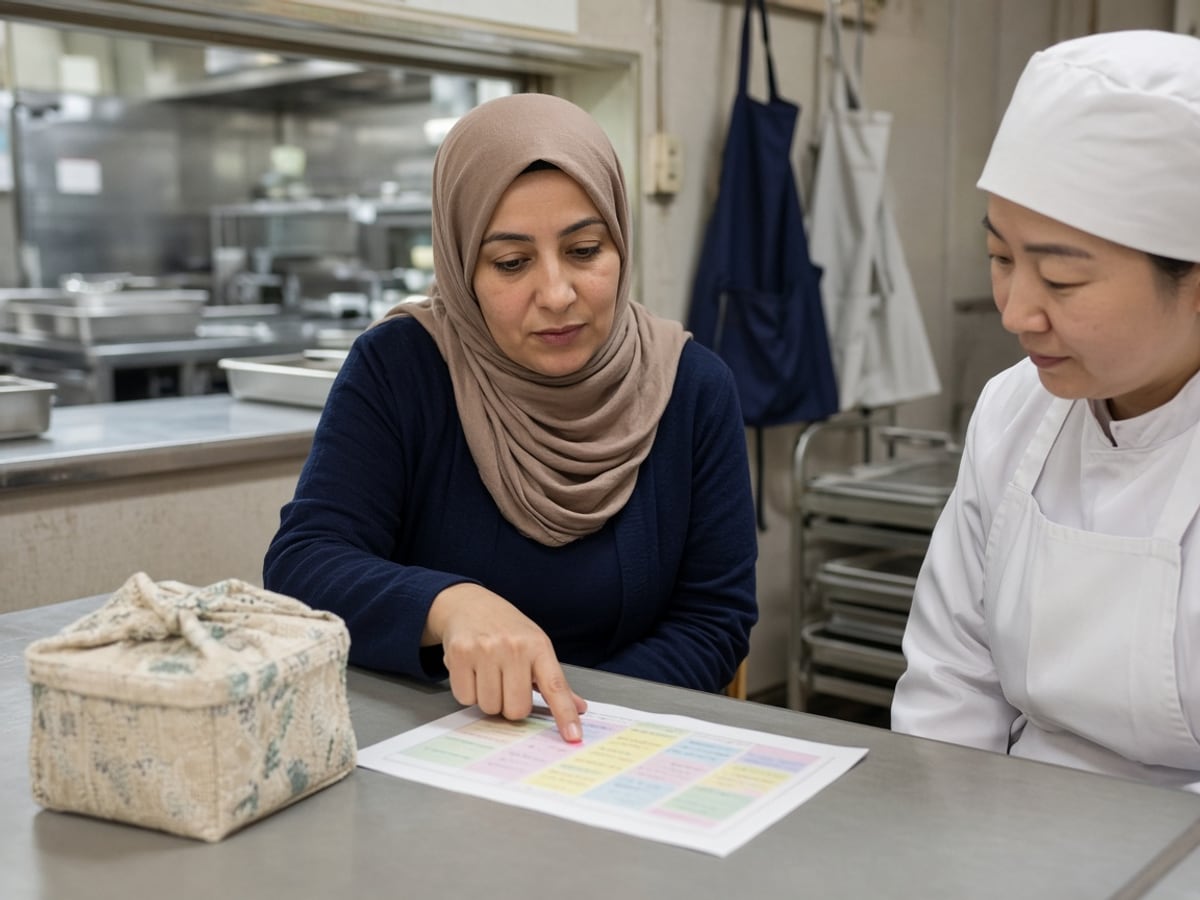
Religion, food and dress at a Japanese school: what MEXT tells schools to consider, and how to ask
宗教・食事・服装への配慮の頼み方(文部科学省「外国人児童生徒受入れの手引」より)
- Applies to
- All of Japan
- Source last checked
- , Open the Japanese source
- Official source
- 外国人児童生徒受入れの手引(文部科学省、2019年3月改訂)第1章・第4章
Japanese schools use the word 配慮 (hairyo, consideration) for adjusting school life to a child's religion or culture. There is no national rule that lists what a school must provide. What exists is MEXT's handbook for receiving foreign children (外国人児童生徒受入れの手引), which tells schools to expect these requests, to consult parents at the start, and to respect the parents' judgement. Everything you obtain is agreed school by school.
What the handbook tells schools
On religion in general, lunch and PE:
特に近年、学校生活で配慮すべき事項として宗教的な背景の違いがあります。例えば、イスラム教圏の子供たちの場合、給食や体育についても配慮が必要です。
On Ramadan: 学校において宗教的な実践であるラマダン(断食月)の行事を児童生徒が行うかどうかなどについても保護者と事前に相談を行い、判断する必要があります。
On whose judgement counts, and when to settle it:
基本的には保護者の宗教的な判断を尊重すべきことが多く、受入れ初期に共通理解をしておくことが重要になってきます。
The handbook adds that this applies to every religion, not one.
On food, it tells schools that the rules go beyond pork and that the kitchen must be in the loop:
一般によく知られている「豚肉を食べない」ことだけではなく、宗教的な判断による禁忌はその国や地域、宗派的な理由から様々に異なることが知られています。
学校では担任のみならず、栄養職員、調理員などとの連携で確認し、対処する必要があります。
On PE, swimming and clothes:
体育に参加するのか、特に水泳に参加するか、そのときの服装はどうするか、また参加するにしても、体操着に着替える場所をどうするかなど、これも保護者との協議、確認が必要です。
And the intake sheet it recommends for the first meeting has a line for 宗教上の配慮事項, next to 病歴やアレルギー and 家庭内使用言語.
What it means for your family
The handbook describes a conversation, not a menu. Nothing in it says a school must serve halal food, open a prayer room or excuse swimming. What it does say, repeatedly, is that the decision is yours and that the school should ask early. So the first trap is waiting to be asked: if the intake meeting passes without it, the default applies, and the default is that every child eats the same lunch and swims in the school swimsuit.
The second trap is saying only "no pork". Families report the grey areas are stock, gelatin and cooking alcohol; the handbook says the judgement is the parent's, so spell yours out, item by item.
The third is underestimating what lunch is. The handbook notes that Japanese schools teach 食事や余暇の過ごし方まで広範に — lunch is a lesson, eaten together in the classroom. Opting out is a bigger request than it sounds, and goes down better framed as "which days" than "never".
How to raise it, and when
| When | Channel | What to bring |
|---|---|---|
| Enrolment or transfer interview | The intake sheet; hand over a written note in Japanese | Foods not eaten, Ramadan dates, prayer, swimming and dress, PE clothing |
| Each month | The 献立表 (kondatehyō, lunch menu), marked like an allergy form | Many schools let you flag days exactly as allergy families do; see the school-lunch allergy form |
| Before swimming season (June) | A 面談 or a note in the 連絡帳 | The swimwear you propose |
| Before Ramadan | A note with the dates | What your child will and will not do |
Phrases that work:
Food: 宗教上の理由で食べられない食材があります。アレルギー対応と同じように献立表で確認し、その日は弁当を持参してもよいでしょうか。
Ramadan: ラマダン期間中は断食をします。給食の時間と体育について、ご相談させてください。
Swimming: 宗教上の理由で、水泳の授業では肌を覆う水着を着用したいです。着替えの場所についてもご相談したいです。
Prayer: お祈りの時間と場所について、ご相談できますか。
Ask that the 栄養士 (dietitian) sees your note; the handbook names them.
What many schools do
Patterns families report, not rules: a bento (弁当持参) on the days the menu has a problem ingredient; a long-sleeved swimsuit or rash guard, already common for sun protection; a fasting child staying with the class at lunch or in another room; PE with lighter activity in Ramadan. A separate halal menu from a central kitchen is rare.
What it costs
Nothing on any page. A bento is your cost; whether the 給食費 is reduced for the days you opt out is decided locally. Ask when you agree the plan.
What goes wrong
- The 担任 agrees and the kitchen never hears. Ask who was told.
- April brings a new 担任 and the agreement is lost. Re-send the note.
- The school treats the request like a severe allergy and excludes the child from cooking lessons or trips. Say what is and is not needed.
- The handbook is quoted as if it were law. It is guidance; your lever is the conversation it tells schools to have.
What to do now
- Write a one-page note in Japanese: foods, dates, dress, prayer.
- Ask for a 面談 before the first week, or now if school has started.
- Ask for the monthly 献立表 and how allergy families mark it.
- Confirm the dietitian and the PE teacher have seen the note.
- Re-send the note every April and before each Ramadan.
Your child's dates, not the general ones
Add your child and ward. The timeline does the rest.